Elbow Brace for Dogs

Elbow Brace for Dogs

Beden
XS
S
M
L
Bacak tarafı
Sağ
Sol
Çıft
WhatsApp
ADD TO BASKET

Find the right size

Measuring the dog’s front leg above the wrist

Mid-leg circumference

Measure around the front leg just above the wrist joint.

Measuring the dog’s front leg below the elbow

Upper-leg circumference

Measure around the front leg just below the elbow joint.

Front-leg measurement points on a dog
Size Mid-leg
circumference
Upper-leg
circumference
B–C distance
XS3.1–3.9 in
8–10 cm
3.5–4.3 in
9–11 cm
7.5–9.8 in
19–25 cm
S3.9–5.1 in
10–13 cm
4.7–5.5 in
12–14 cm
8.7–11.4 in
22–29 cm
M4.3–5.5 in
11–14 cm
5.5–6.3 in
14–16 cm
10.2–13.4 in
26–34 cm
L5.1–6.3 in
13–16 cm
6.7–7.9 in
17–20 cm
12.2–15.7 in
31–40 cm

Consider the mid-leg circumference, upper-leg circumference, and B–C distance shown in the image together. When you stand behind your dog, the leg on your right is your dog’s right leg.
When to use the elbow brace

The brace may be used to support the elbow joint during care for elbow dysplasia, arthritis, ligament and soft-tissue injuries, and recovery after surgery.

Elbow joint stability

It may help keep elbow movement more controlled and distribute the load on the joint.

Support for elbow dysplasia and arthritis

For ongoing joint conditions, it may provide additional support alongside a veterinarian’s care plan.

Adjustable splint system

Removable rigid acrylic and flexible metal splints allow the level of support to be adjusted as needed.

Right, left, and bilateral options

The brace comes in models for the right front leg, left front leg, or both elbows.

Low-profile design

The compact design aims to support the elbow without restricting movement more than necessary during daily use.

Soft neoprene material

Soft neoprene supports comfort, and hand washing makes the brace easier to care for.

The elbow brace does not replace a veterinary examination or treatment. A veterinarian should advise on the right model, level of support, and wear time.

Getting used to the brace video

How to fit a single-sided brace

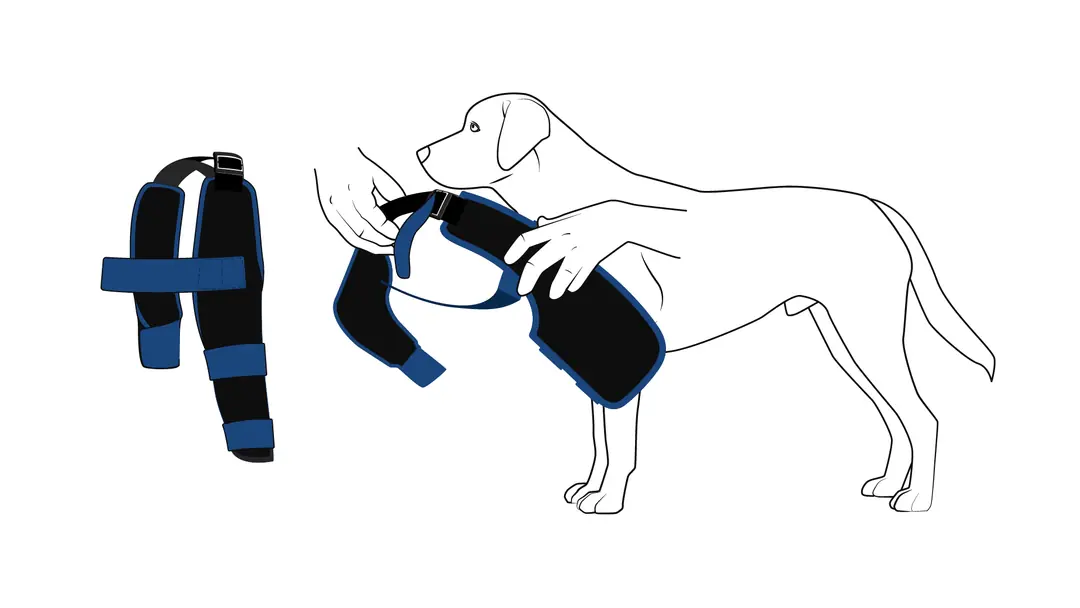
Before fitting, make sure you have the correct model and size. The fastenings should hold the brace in place without restricting circulation or natural movement.

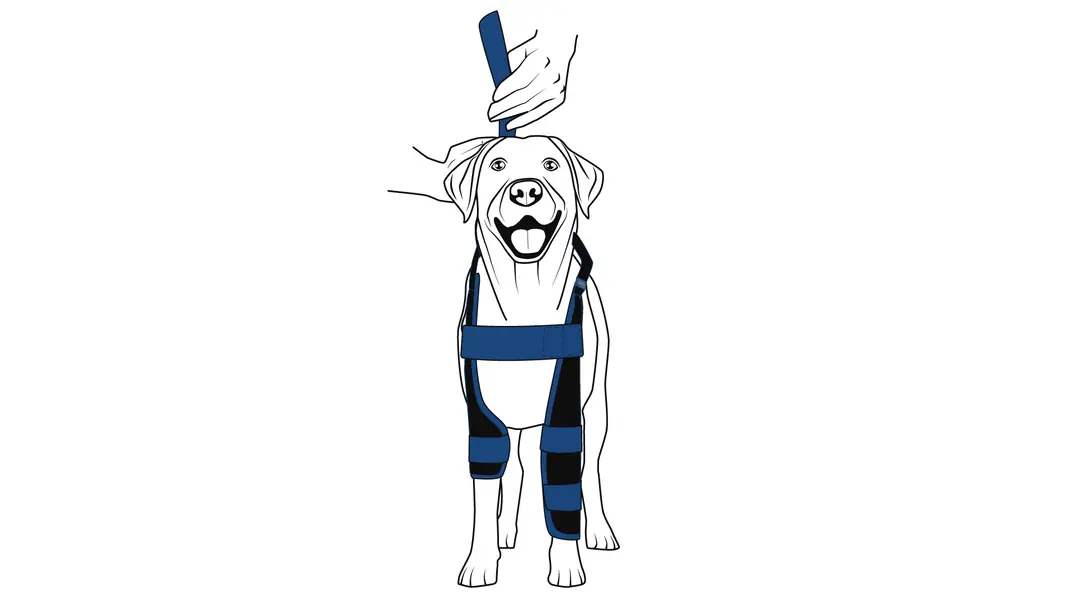
  1. Passing the dog’s head through the center opening of the elbow brace

    Step 1

    Pass your dog’s head through the center opening of the support.

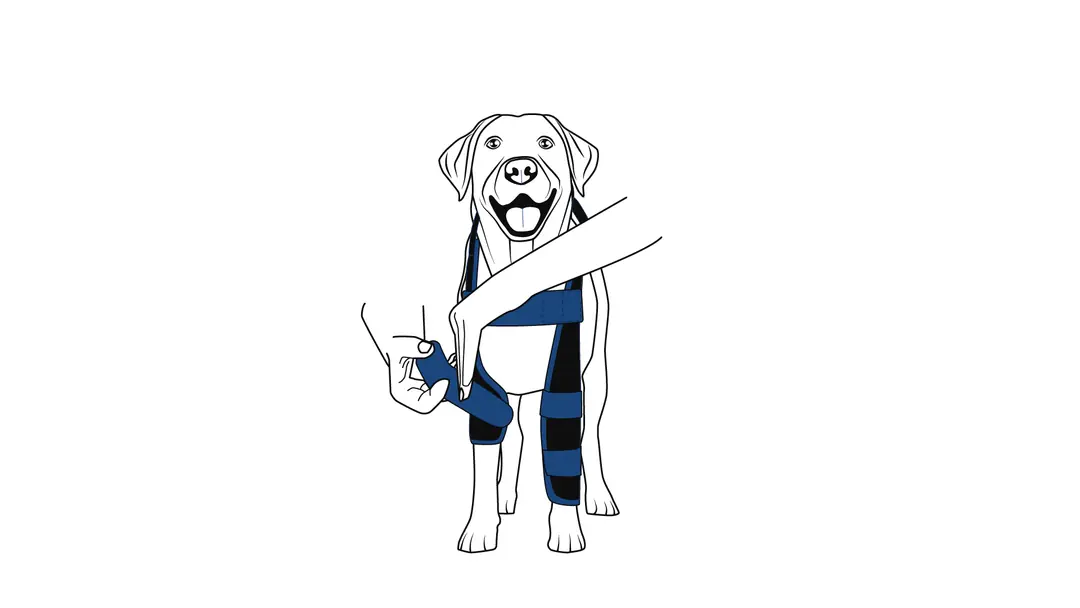
  2. Placing the first elbow section on the front leg

    Step 2

    Place the first elbow section on the front leg that needs support and fasten its straps.

  3. Positioning the other section on the opposite front leg

    Step 3

    Position and secure the other section on the opposite front leg. For the bilateral model, place the second elbow section on that leg. For a right or left single-sided model, follow the fitting steps for the model you selected.

  4. Adjusting the upper fastening over the chest

    Step 4

    Adjust the upper buckle and hook-and-loop fastening over the chest.

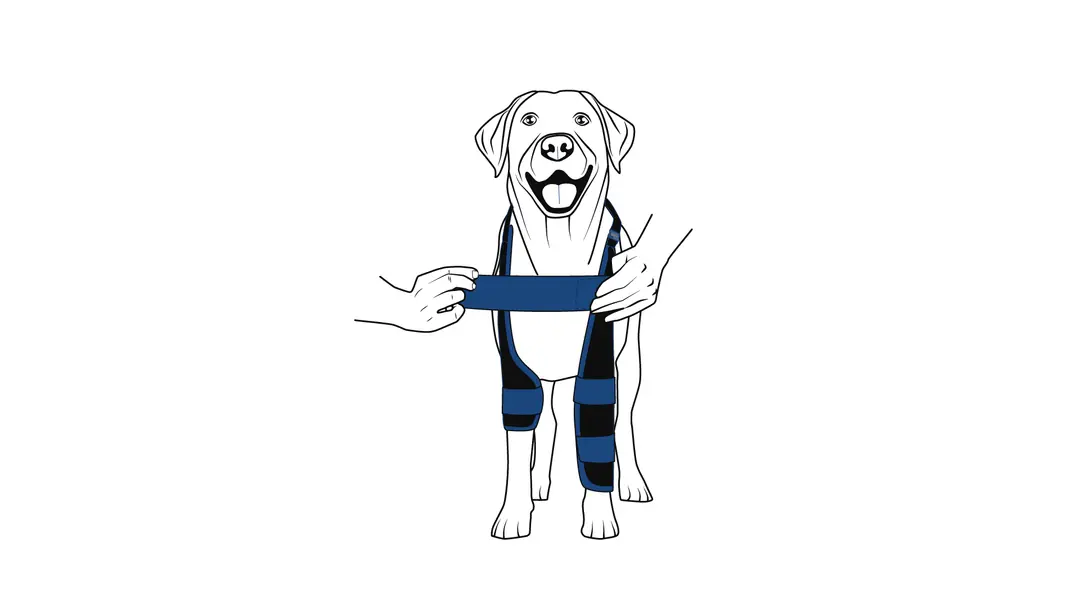
  5. Adjusting the middle chest strap

    Step 5

    Tighten the middle chest strap so both sides sit evenly.

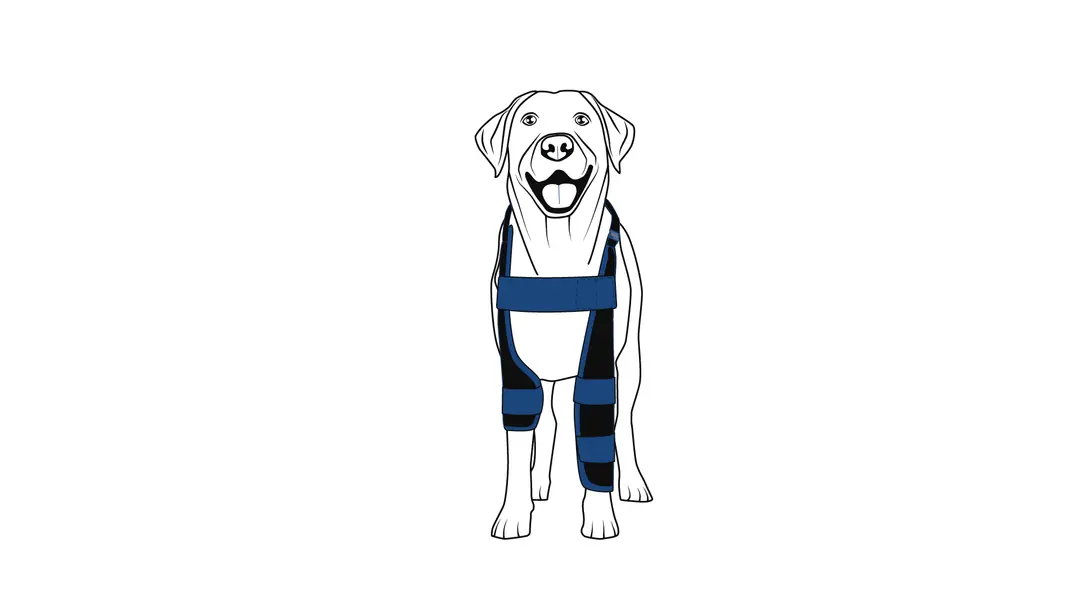
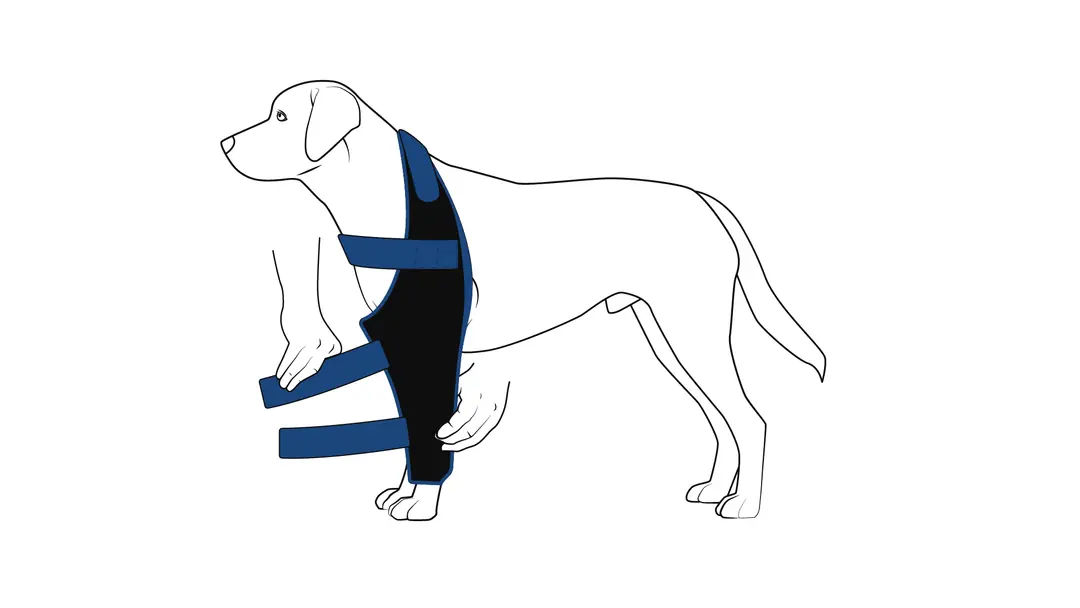
  6. Checking the final fit of the elbow brace straps

    Step 6

    Check that the support aligns with the elbows and does not slip during movement.

After fitting, check the position at both elbows, strap tension, and your dog’s comfort. Remove the brace if you notice rubbing, redness, swelling, or marked discomfort.

Use and care

Getting your dog used to the brace

Introduce the brace in a calm setting. During the first sessions, watch its fit and your dog’s response. Follow the movement limits set by your veterinarian while your dog adjusts.

Follow your veterinarian’s plan for wear time, frequency, splint selection, and when to remove the brace.

After each use

  • Remove the brace and check the skin for redness, irritation, moisture, or rubbing.
  • Let the skin breathe before putting the brace on again.
  • Remove the brace at night unless your veterinarian recommends another schedule.
  • Stop using it if you notice rubbing, swelling, or changes in gait or posture.
  • Follow your veterinarian’s advice on wear time and frequency.

Cleaning and storage

  • Remove detachable splints and other parts before cleaning.
  • Hand wash only with lukewarm water and mild soap.
  • Allow it to air dry completely before using it again.
  • Do not machine wash or tumble dry.
  • Keep it out of direct sunlight and away from other heat sources.
  • Store it flat in a cool, dry place to help retain its shape.

Frequently asked questions

Which part of the leg does the brace support?

The brace supports the elbow joint on the upper part of the front leg. If the problem is at the carpal joint closer to the paw, consider the front leg brace.

What is the difference between single-sided and bilateral elbow braces?

Single-sided models support either the right or left elbow. The bilateral model is designed for situations where both elbows need support.

Why are there separate right and left models?

The brace needs to match the leg’s anatomical orientation to sit correctly over the joint. Choose the front leg that needs support when ordering.

How do I choose the right size?

Breed or weight alone is not enough to choose a size. Measure both leg circumferences shown in the size guide and the distance marked B–C in the image. If the measurements correspond to different sizes, contact us before ordering.

Is the brace suitable for every dog with elbow dysplasia?

No. Suitability should not be assumed. A veterinarian should assess the type and severity of elbow dysplasia and the dog’s mobility.

Does it also support shoulder problems?

The brace is designed for the elbow joint. Do not assume it is suitable for a shoulder problem; a veterinarian should identify where the problem originates.

Get to Know Our Products

View Our Catalogue
logo