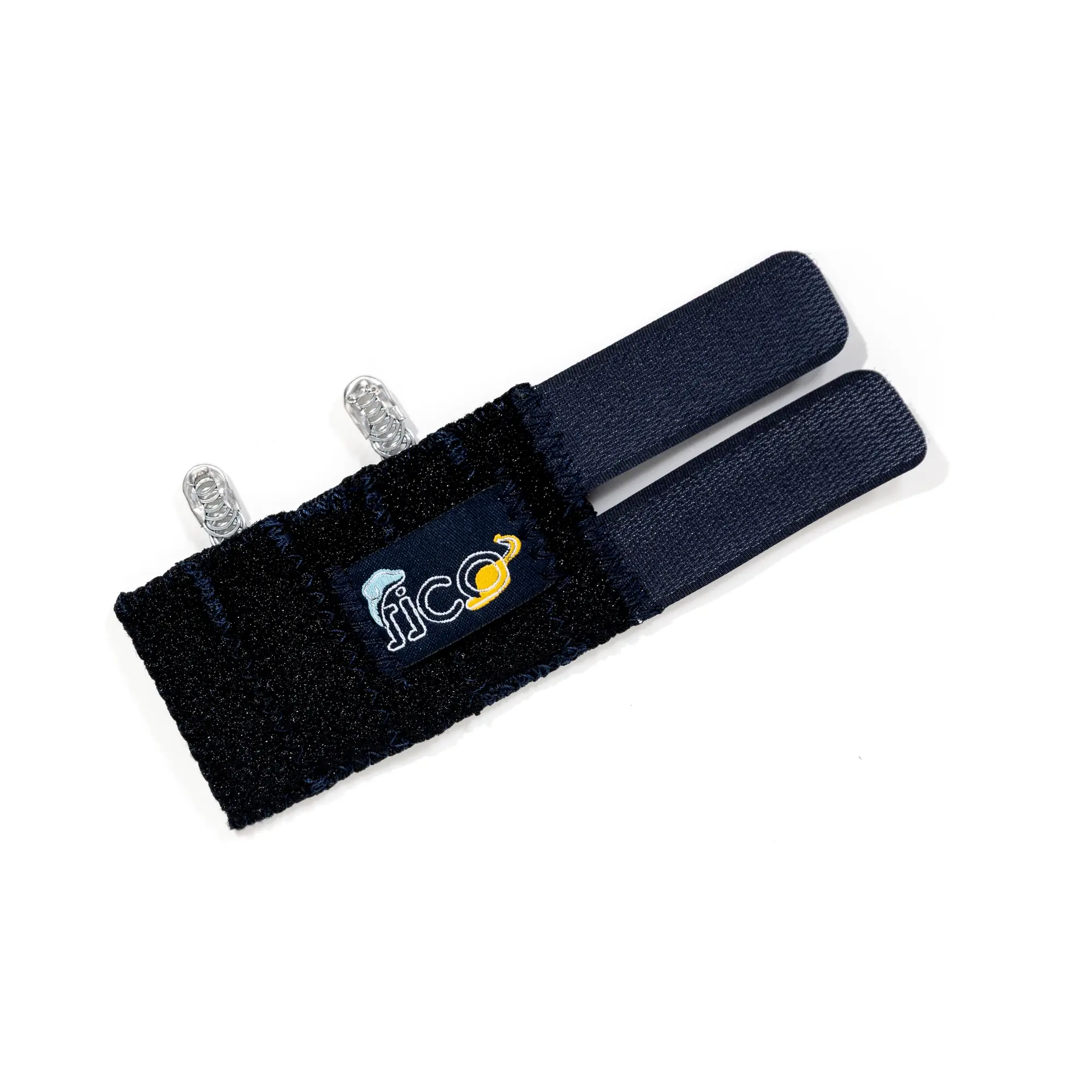
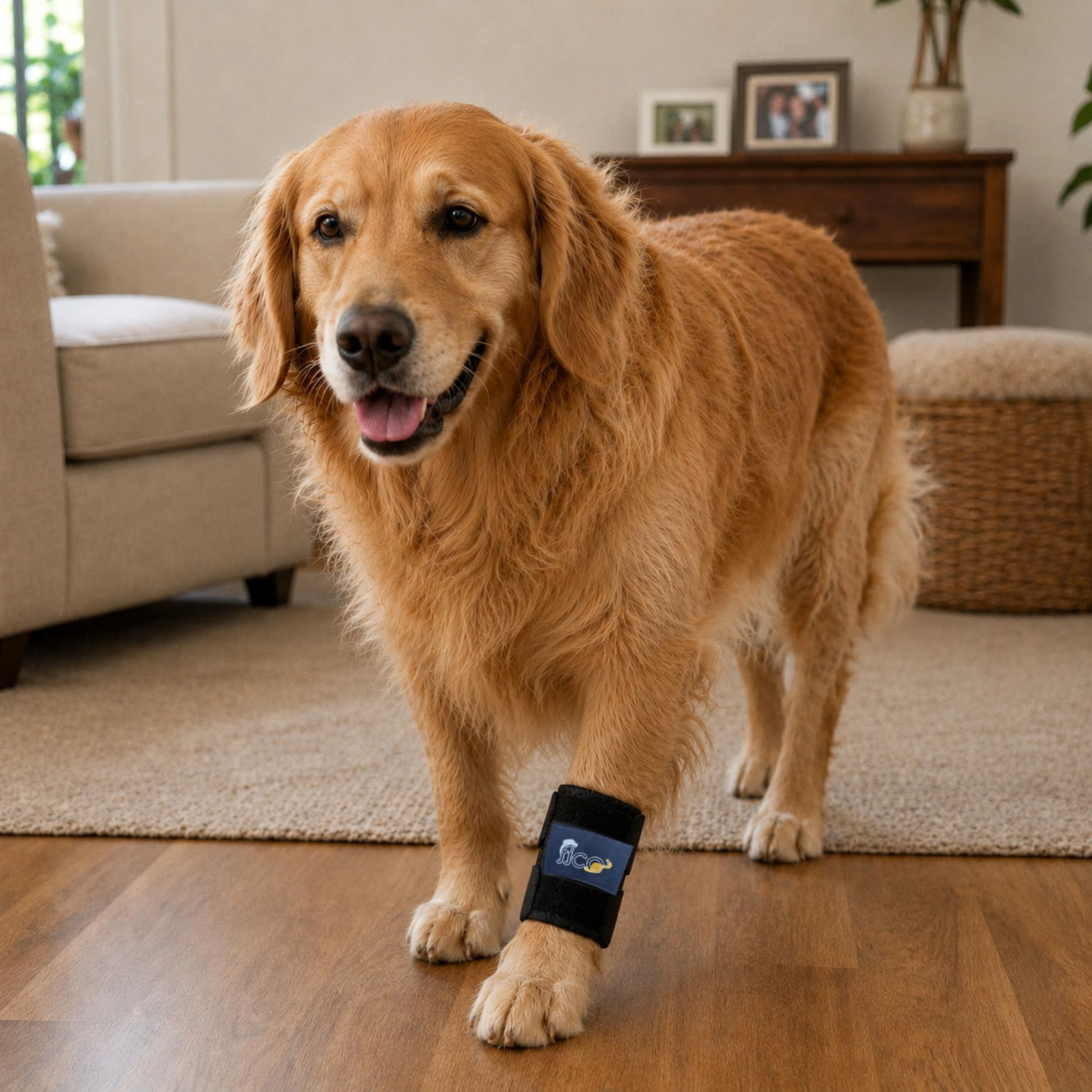
Front Leg Ankle Brace for Cats & Dogs

Front Leg Ankle Brace for Cats & Dogs

Beden
XS
S
M
L
XL
XXL
WhatsApp
ADD TO BASKET

Find the right size

Measuring the carpal joint circumference on a dog's front leg

Wrist circumference

Measure around the carpal (wrist) joint on the front leg.

Front leg carpal circumference and brace height measurement points
Size Wrist circumference Brace
height
XSUp to 2.8 in
Up to 7 cm
2.0 in
5 cm
S3.1–4.3 in
8–11 cm
2.0 in
5 cm
M3.5–4.7 in
9–12 cm
3.9 in
10 cm
L5.1–6.7 in
13–17 cm
3.9 in
10 cm
XL5.1–6.7 in
13–17 cm
5.9 in
15 cm
XXL6.7–8.7 in
17–22 cm
5.9 in
15 cm

Check both wrist circumference and brace height. The brace should extend at least 0.4 in (1 cm) above and below the joint. If you are unsure, contact us with measurements and a photo.

When to use the front leg brace

The front leg brace supports the carpal joint on the lower front leg and helps stabilize it during everyday movement.

Carpal hyperextension, ligament strains, and joint instability

May help support a carpal joint affected by hyperextension, ligament strains, or loss of stability during everyday movement.

Arthritis and recurring strains

May help provide more balanced joint support in cases of arthritis or recurring strains.

Recovery after surgery

May help provide controlled support to the front leg during recovery after surgery.

Protection for wounds and sensitive areas

May be considered as a protective layer when a wound or sensitive area needs protection from external contact.

Adjustable three-in-one splint system

The brace can be worn without a splint or with a removable flexible or rigid splint, depending on the required support. This option is not available in size XS.

Lightweight and durable design

Made with soft neoprene, reinforced stitching, and adjustable straps. Its lightweight design helps it stay in place during daily use.

The brace does not replace veterinary examination or treatment. A veterinarian should determine product suitability, splint choice, and duration of use. Use it over a recent surgical site, bandage, or open wound only with veterinary approval.

Getting used to the brace: video

How to fit the brace

Make sure you have the correct size before fitting. The straps should hold the brace in place without restricting circulation or natural movement.

  1. Positioning the front leg brace over the carpal joint

    Step 1

    Place the brace around the injured or weak area. Align its center with the carpal joint or sensitive area that needs support.

  2. Fastening the lower strap of the front leg brace

    Step 2

    Wrap the lower strap around the leg just above the paw and fasten it securely.

  3. Fastening the upper strap of the front leg brace

    Step 3

    Wrap the upper strap around the leg and fasten it to hold the brace in place.

  4. Readjusting the lower strap of the front leg brace

    Step 4

    Check and readjust the lower strap. Make sure the brace fits evenly and comfortably without slipping.

  5. Checking the fit while the pet walks after fitting the front leg brace

    Step 5

    Watch your pet walk and stand. Make sure the brace remains stable and in position during movement.

After fitting, check the position of the brace and your pet’s comfort. Remove it if you notice clear discomfort.

Use and care

Getting used to the brace

Introduce the brace to your pet in a calm setting. During the first uses, watch the fit and your pet’s response closely. Let your pet get used to it during movements approved by your veterinarian, and follow the plan for wear time and activity level.

Follow your veterinarian’s advice on wear time, splint choice, and frequency of use.

After each use

  • Remove the brace and check the skin for redness, irritation, moisture, or rubbing.
  • Let the skin air out before the next use.
  • Remove the brace at night unless your veterinarian recommends a different schedule.
  • Stop use if you notice rubbing, swelling, or changes in walking or posture.
  • Follow your veterinarian’s advice on duration and frequency of use.

Cleaning and storage

  • Remove the detachable splints and other parts before cleaning.
  • Hand wash the brace using only lukewarm water and mild soap.
  • Allow it to air dry completely before using it again.
  • Do not use a washing machine or tumble dryer.
  • Keep the brace away from direct sunlight and other heat sources.
  • Store it flat in a cool, dry place to help preserve its shape.

Frequently asked questions

Where is the carpal joint on a front leg?

The carpal joint sits just above the front paw and is similar to a human wrist. If the problem is closer to the elbow, the elbow brace may be more suitable.

How does a front leg brace differ from an elbow brace?

The front leg brace supports the carpal joint. The elbow brace supports the elbow joint higher up the leg. Choose the product according to the joint affected.

How does it differ from a knuckling brace?

The front leg brace helps stabilize the carpal joint. The knuckling brace is designed to help guide the toes toward a more natural position when a pet knuckles or drags the paw.

Can I choose a size based on my pet’s breed or weight?

No. Even pets of the same breed or weight can have different wrist circumferences. Measure the wrist and check that the brace height covers the joint appropriately. If the circumference and height do not match the same size, contact us before ordering.

Does a dog refusing to put weight on a front paw mean it has carpal hyperextension?

Not always. Sudden limping can result from problems involving a bone, ligament, muscle, paw, or nerve. A veterinarian should identify the affected area before you choose a brace.

Is one brace enough if both front legs have problems?

Each leg should be assessed separately. A veterinarian should determine whether both legs need support and what level of support is appropriate for each.

Get to Know Our Products

View Our Catalogue
logo