Knee Brace for Dogs
Knee Brace for Dogs
Knee Brace for Dogs
Knee Brace for Dogs
Knee Brace for Dogs
Knee Brace for Dogs
Knee Brace for Dogs
Knee Brace for Dogs
Knee Brace for Dogs
Knee Brace for Dogs
Knee Brace for Dogs
Knee Brace for Dogs

Knee Brace for Dogs

Beden
XXS
XS
S
S (CB)
M
M (CB)
L
XL
Bacak tarafı
Sağ
Sol
WhatsApp
ADD TO BASKET

Find the Right Size for Your Dog's Knee Brace

Measurement points for lower leg and thigh circumference on a dog

Lower leg circumference

Measure around the hind leg just above the hock joint.

Measuring a dog's thigh circumference

Thigh circumference

Measure around the widest part of the thigh at groin level.

Measuring the middle of a dog's hind leg
Size Lower leg
circumference
Thigh
circumference
XXS2.0–2.8 in
5–7 cm
5.9–7.1 in
15–18 cm
XS2.4–3.1 in
6–8 cm
7.1–8.3 in
18–21 cm
S3.1–3.9 in
8–10 cm
8.3–9.4 in
21–24 cm
M3.5–4.3 in
9–11 cm
9.8–11.4 in
25–29 cm
L4.3–5.5 in
11–14 cm
11.4–12.2 in
29–31 cm
XL5.1–5.9 in
13–15 cm
12.2–13.8 in
31–35 cm

Do not choose a size or model based on breed alone. If the measurements do not match or you are unsure, send us the measurements and a side-view photo of the leg.

Short-legged models
S (CB)3.1–3.9 in
8–10 cm
7.9–9.8 in
20–25 cm
M (CB)3.5–4.7 in
9–12 cm
9.4–11.4 in
24–29 cm

When you stand behind your dog, the leg on your right is your dog's right leg.
When to use the knee brace

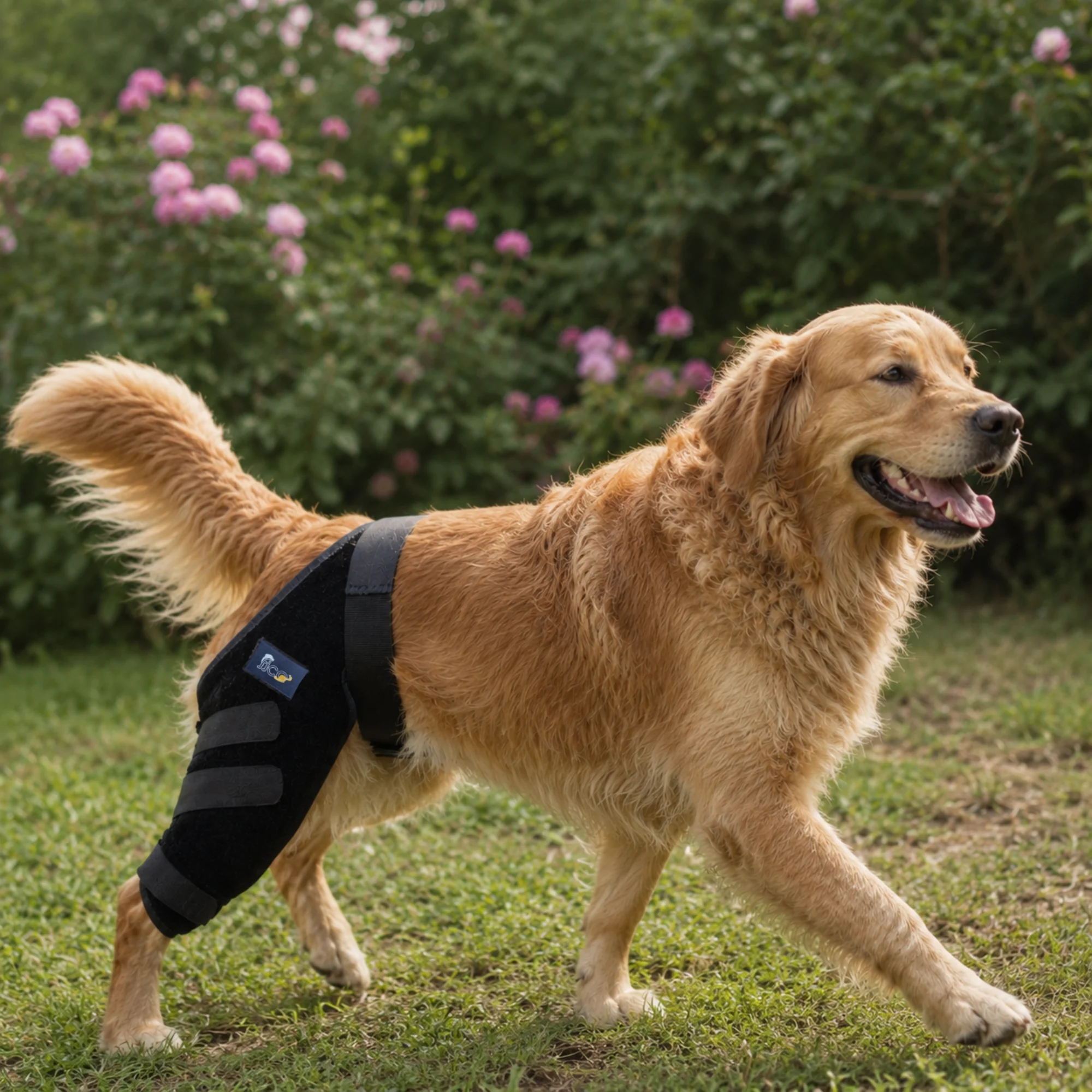
The brace may be used to support the hind knee during rehabilitation for cruciate ligament injuries, knee arthritis, ligament strains, and after TPLO surgery.

Cruciate ligament support

It may help provide controlled support to the knee joint in cases of ACL or CCL injury.

Rehabilitation after TPLO

It may provide additional support as part of the recovery and rehabilitation plan set by your veterinarian.

Designed for the right or left leg

Right and left leg options are available for a more accurate fit around the hind knee.

Adjustable anatomical fit

Wide hook-and-loop straps let you adjust the brace to your dog's leg and help keep it in place during movement.

Comfortable neoprene construction

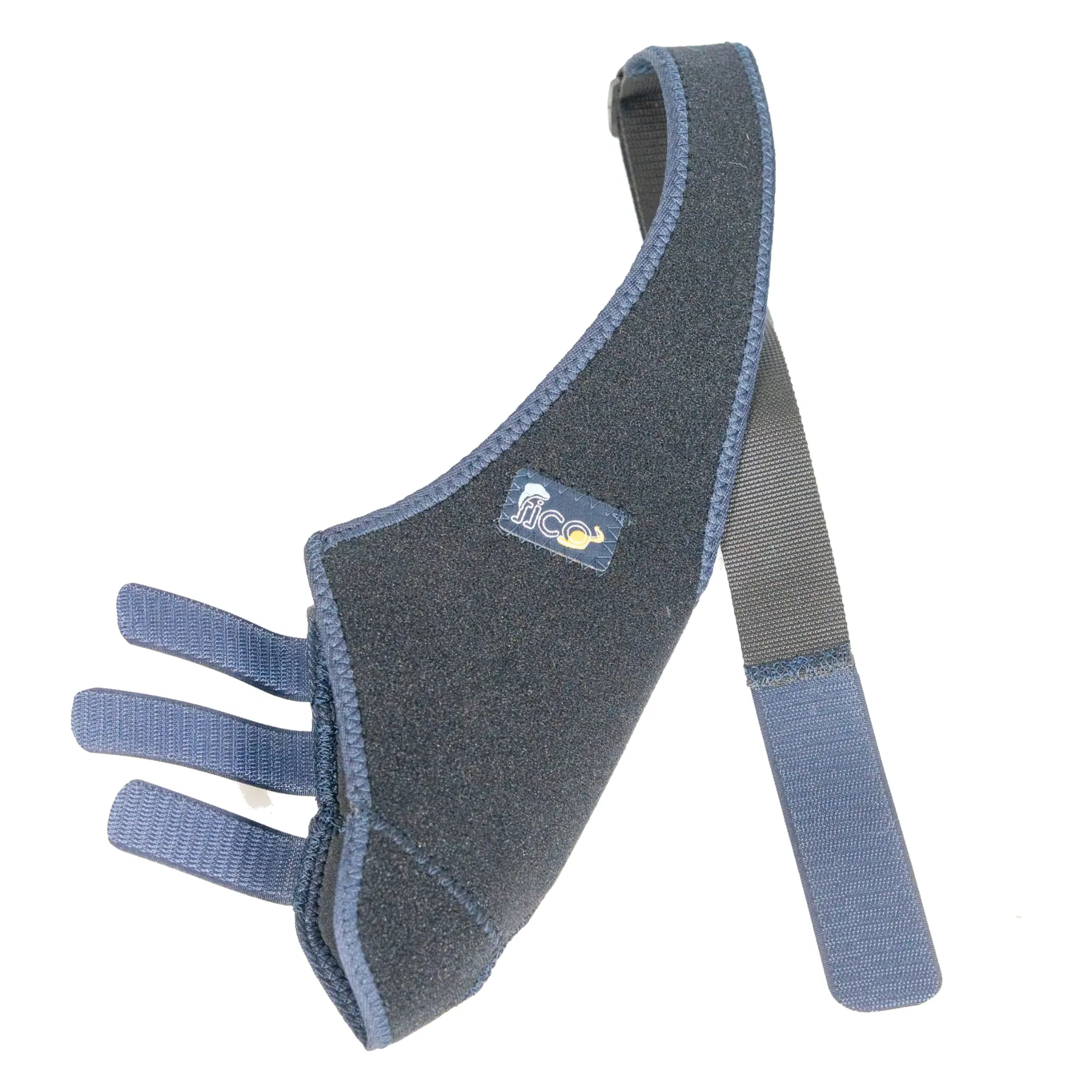
Soft, lightweight neoprene wraps around the leg for a comfortable fit.

Water-resistant and washable

Reinforced stitching and a hand-washable design make routine care easier.

The brace does not replace a veterinary examination or treatment. Your veterinarian should determine the injury site, appropriate leg model, and duration of use.

Getting Used to the Brace Video

How to fit the brace

Before fitting the brace, check that you have the correct right or left leg model and size. The straps should hold it in place without restricting circulation or natural movement.

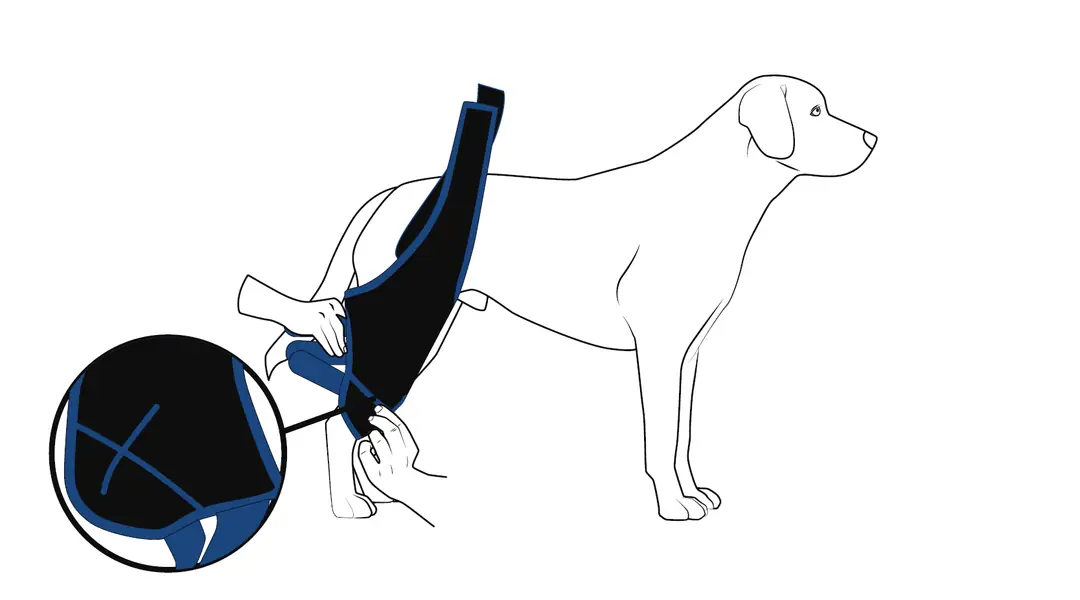
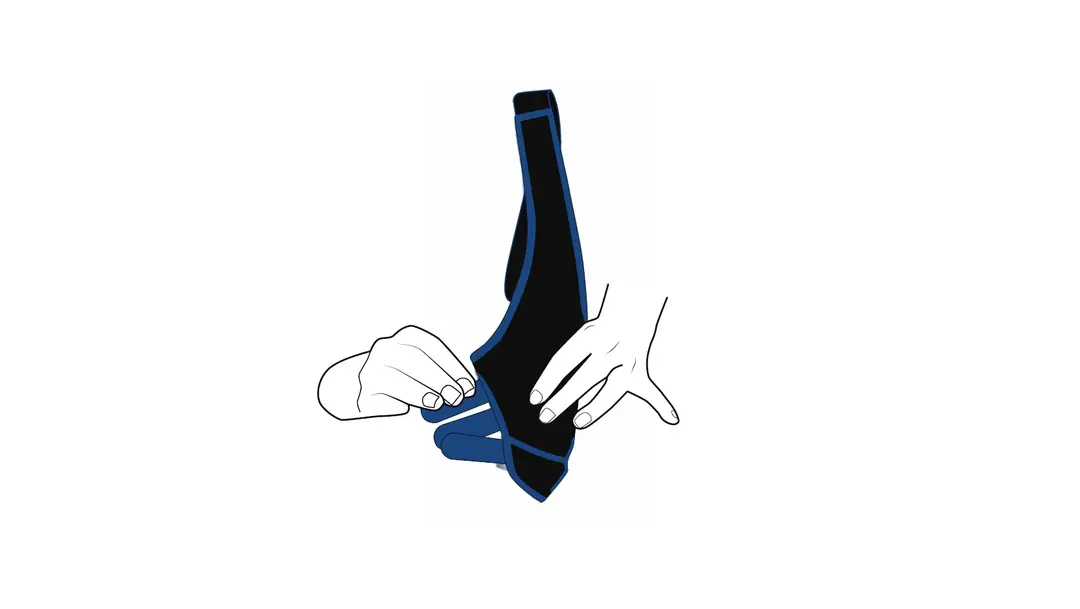
  1. Opening the straps of the knee brace before fitting

    Step 1

    Open all the straps to prepare the brace for fitting.

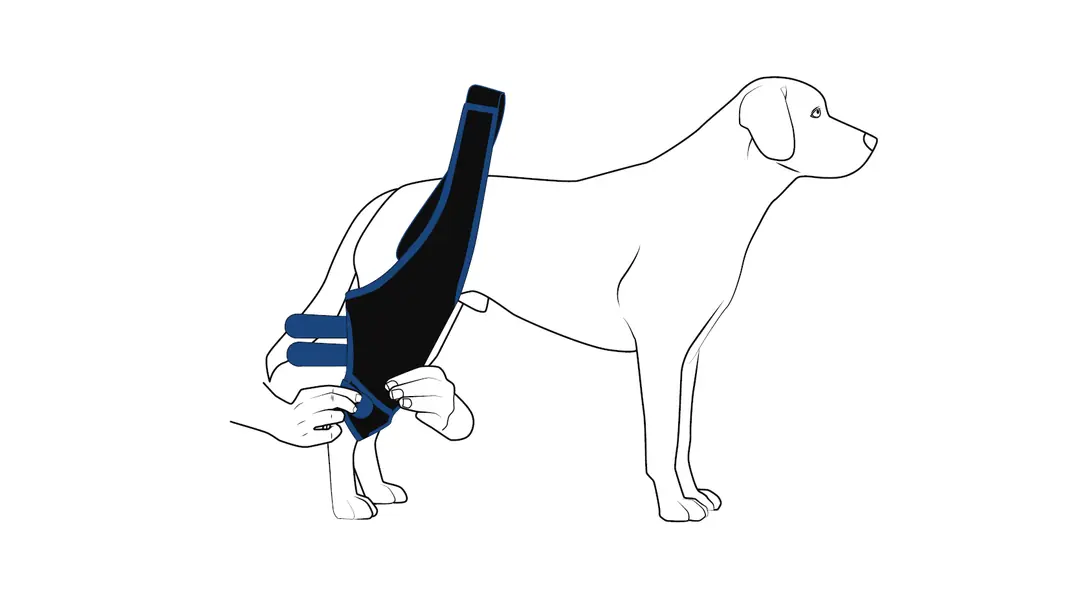
  2. Aligning the knee brace with the hind knee joint

    Step 2

    Align the joint section of the brace with your dog's hind knee joint.

  3. Fastening the lower strap of the knee brace

    Step 3

    Wrap and fasten the lower strap around the leg first.

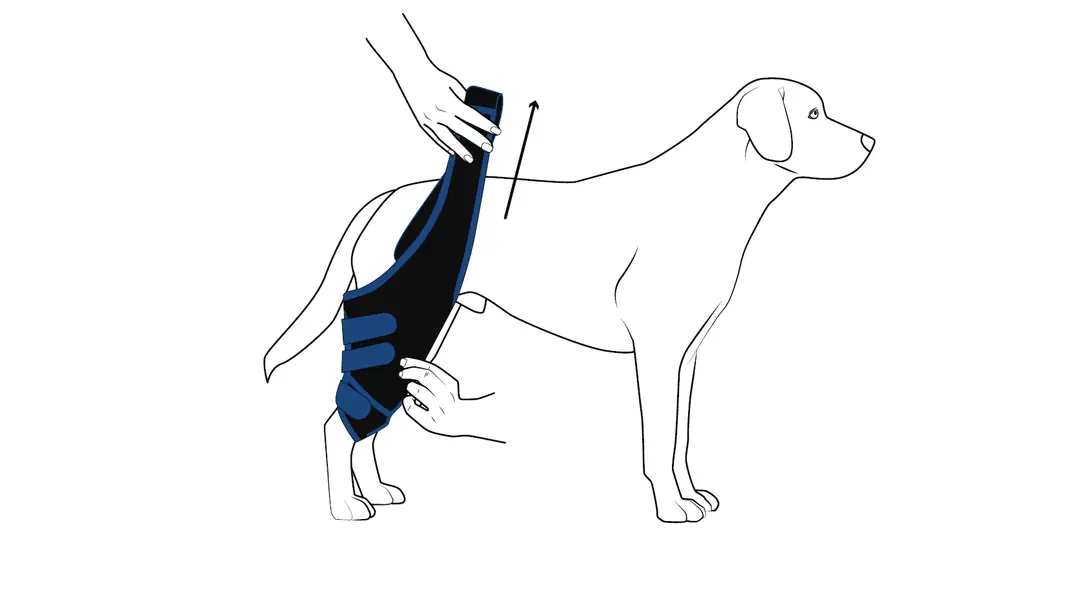
  4. Positioning the knee brace over the knee joint

    Step 4

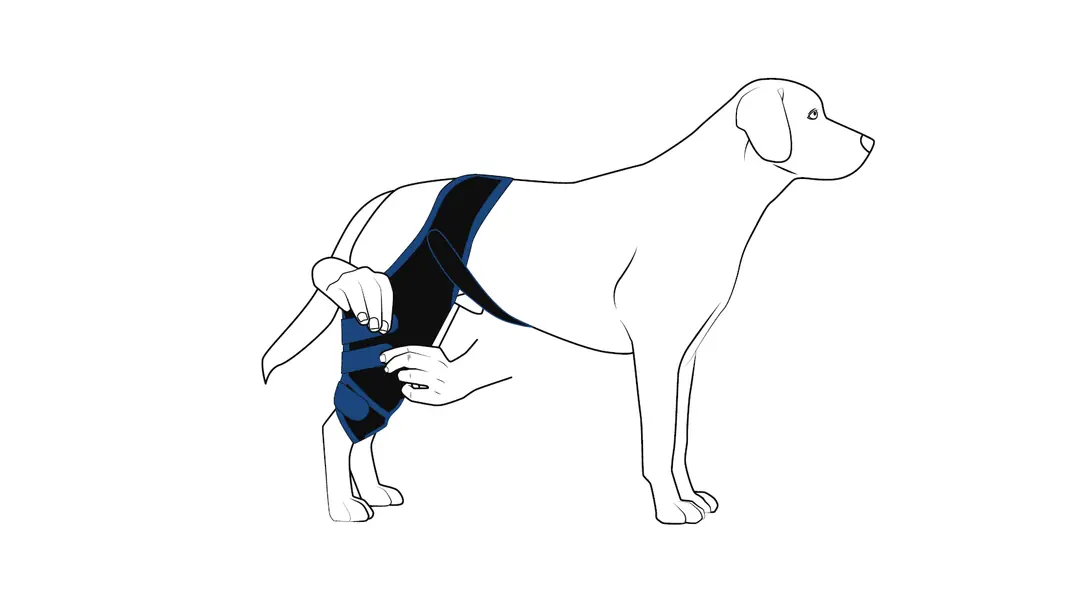
    Gently pull the brace upward to position it over the joint.

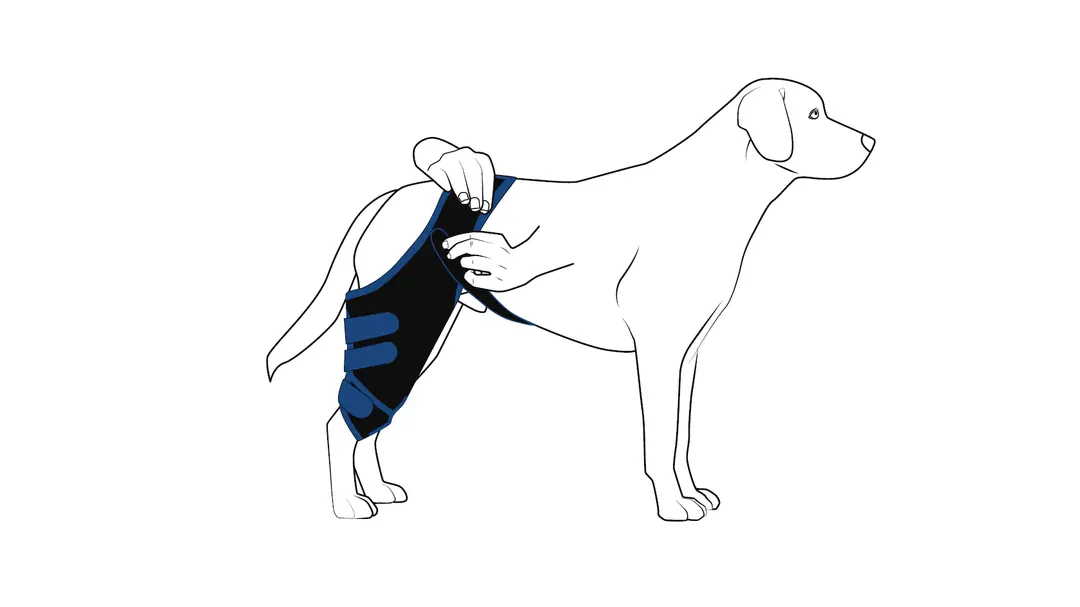
  5. Fastening the upper strap of the knee brace around the thigh

    Step 5

    Wrap and fasten the upper strap around the thigh.

  6. Checking the knee brace straps after fitting

    Step 6

    Check all straps. The brace should fit securely without restricting circulation or natural movement.

Let your dog take a few controlled steps. Check that the brace stays over the joint and that the straps do not pinch the leg. Remove it if you notice swelling, rubbing, or obvious discomfort.

Use and care

Introducing the brace

Introduce the brace in a calm setting. During the first uses, watch its fit and your dog's response closely. Let your dog get used to it during movements approved by your veterinarian, and follow the recommended plan for wear time and activity.

Follow your veterinarian's plan for how long and how often the brace should be worn. During the first uses, check the fit and your dog's skin closely.

After each use

  • Remove the brace and check the skin for redness, irritation, moisture, or rubbing.
  • Let the skin air out before the next use.
  • Remove the brace at night unless your veterinarian recommends a different wear schedule.
  • Stop using it if you notice rubbing, swelling, or a change in gait or posture.
  • Follow your veterinarian's advice on wear time and frequency.

Cleaning and storage

  • Remove detachable parts before cleaning.
  • Hand-wash with lukewarm water and mild soap only.
  • Allow it to air-dry completely before using it again.
  • Do not machine-wash or tumble-dry.
  • Keep it out of direct sunlight and away from other heat sources.
  • Store it flat in a cool, dry place to help retain its shape.

Frequently asked questions

Are ACL and CCL the same ligament in dogs?

Yes. The canine equivalent of the ligament called the ACL in humans is the cranial cruciate ligament, usually called the CCL. Both terms may be used when discussing cruciate ligament problems in a dog's knee.

How does a knee brace differ from a hock brace?

A knee brace supports the knee joint and cruciate ligament area. A hock brace is designed for the hock joint above the paw.

Why are there separate right and left models?

The right and left hind legs have different anatomical orientations. Choosing the model for the correct leg helps align the brace with the joint and its direction of movement.

Can a dog with problems in both knees wear two braces?

If needed, separate right and left braces may be considered. Because wearing braces on both legs can change a dog's gait, make this decision with your veterinarian.

Can the brace be used for patellar luxation?

The grade of patellar luxation and the knee's anatomy differ between dogs. A veterinarian should assess the patella before deciding whether the brace is suitable.

Can it replace surgery for a torn cruciate ligament?

No. The brace does not repair the cruciate ligament and is not a direct substitute for procedures such as TPLO. A veterinarian should recommend treatment based on the severity of the injury, the dog's weight, and overall health.

Get to Know Our Products

View Our Catalogue
logo