Hock Brace for Cats & Dogs

Hock Brace for Cats & Dogs

Beden
XS
S
M
L
XL
WhatsApp
ADD TO BASKET

Find the right size

Measurement points for the hind leg hock circumference and brace height

Lower leg circumference

Measure around the hind leg below the hock joint.
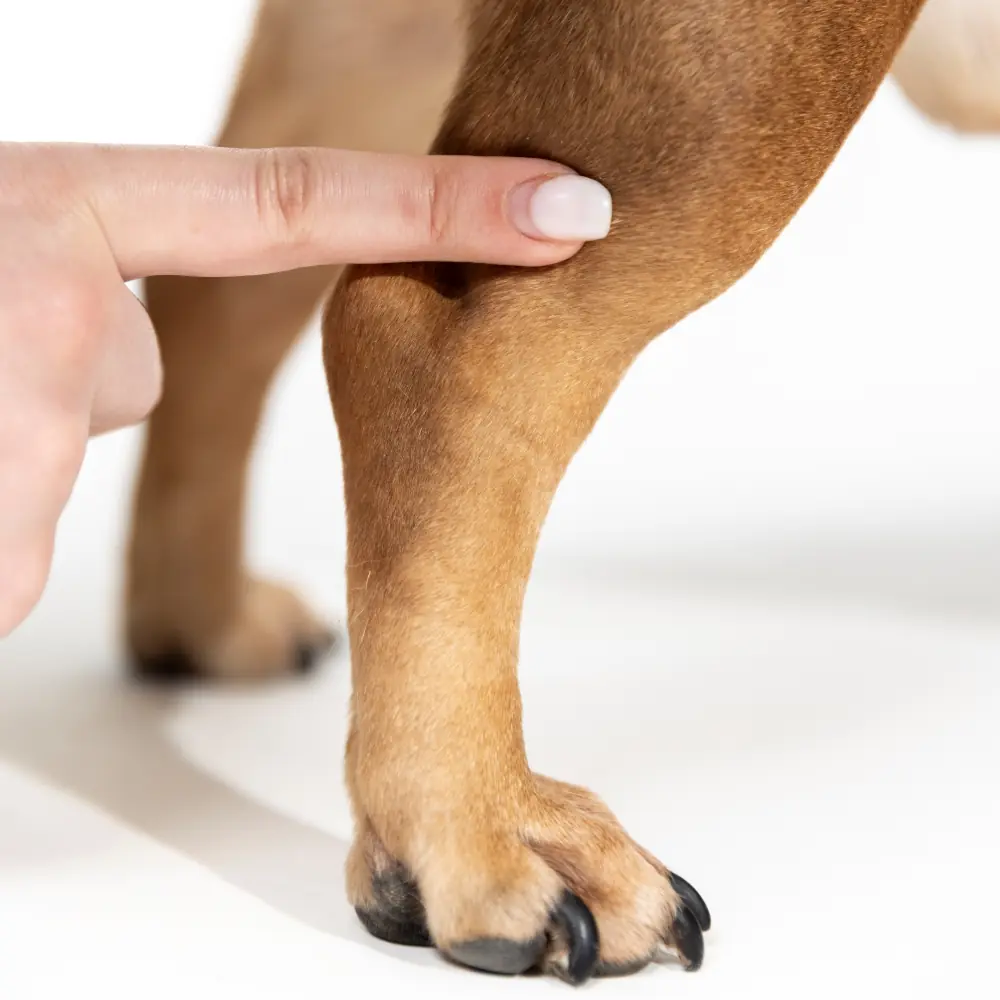
Measuring the circumference above the hock joint

Mid-leg circumference

Measure around the hind leg above the hock joint.
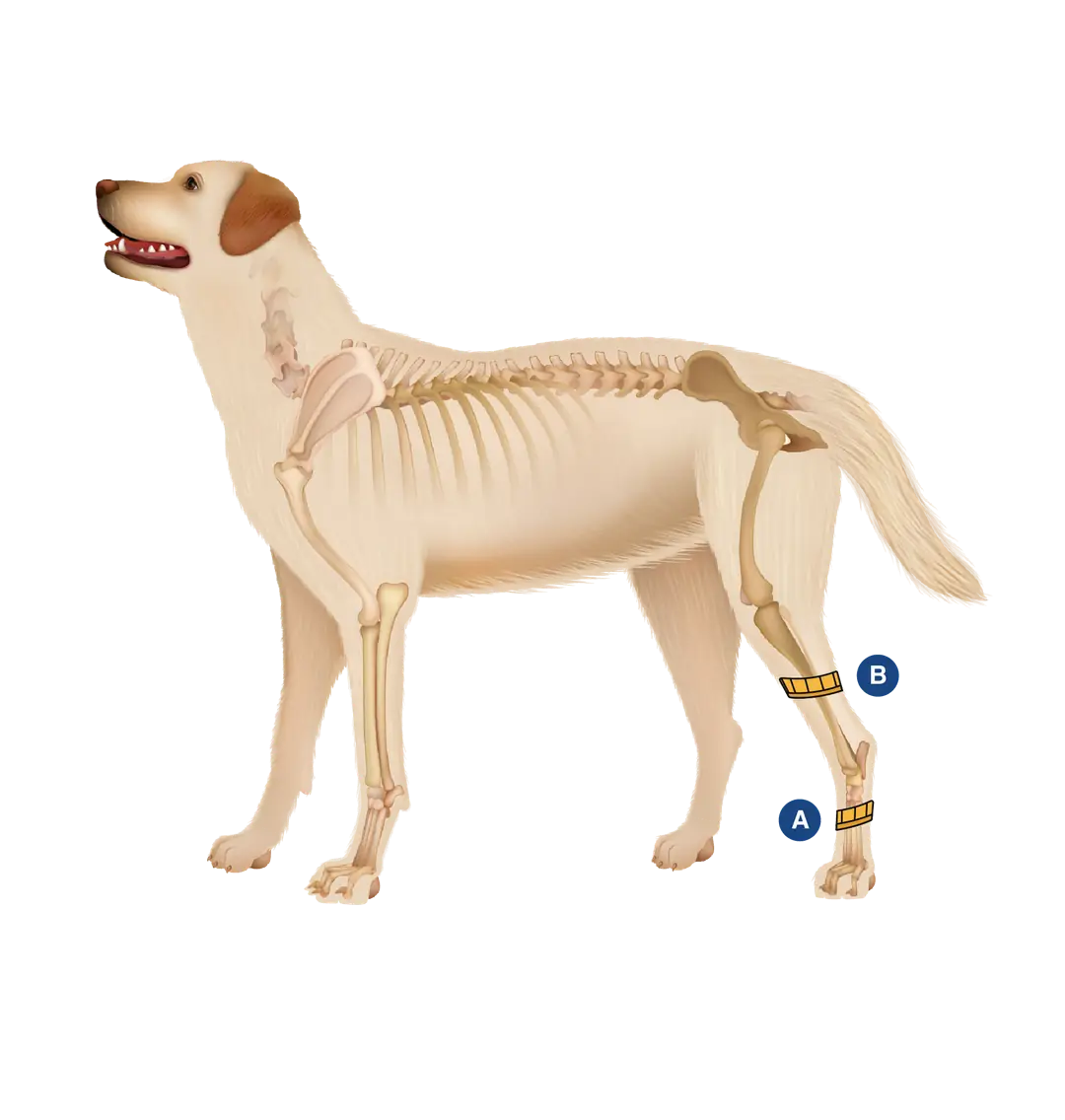
Measuring the circumference below the hock joint
Size Lower leg
circumference
Mid-leg
circumference
Brace
height
XS 2.8–3.9 in
7–10 cm
4.3–5.5 in
11–14 cm
4.3 in
11 cm
S 3.5–4.7 in
9–12 cm
4.7–6.3 in
12–16 cm
5.7 in
14.5 cm
M 3.9–5.1 in
10–13 cm
5.1–6.7 in
13–17 cm
6.7 in
17 cm
L 4.7–5.9 in
12–15 cm
5.9–7.5 in
15–19 cm
7.9 in
20 cm
XL 5.5–6.7 in
14–17 cm
6.7–8.3 in
17–21 cm
9.1 in
23 cm

Both circumference measurements should match the same size. Check the brace height as well. If you are unsure, send us the measurements and a side-view photo of the leg.
When to use the hock brace

The hock brace may be used for hock arthritis, ligament strains, sprains, soft tissue injuries, and recovery after surgery.

Hock joint support

Supports the hock joint from the outside and helps stabilize it during movement.

Ligament strains and sprains

May help support strained ligaments and sensitive soft tissues during controlled movement.

Two removable splint options

The rigid acrylic splint provides firmer stabilization, while the flexible metal splint offers more flexible, controlled support.

Adjustable support options

Depending on the need, the brace can be worn with the rigid splint, the flexible splint, or no splint.

Lightweight, comfortable design

The soft neoprene body and adjustable straps are designed to fit around the leg comfortably.

Durable and easy to clean

Reinforced stitching, water-resistant material, and a hand-washable design make ongoing use easier.

The brace does not replace veterinary examination or treatment. A veterinarian should determine the right size, splint option, and duration of use.

Getting used to the brace: video

How to fit the brace

Before fitting the brace, make sure you have the correct size and suitable splint option. The straps should hold the brace in place without restricting circulation or natural movement.

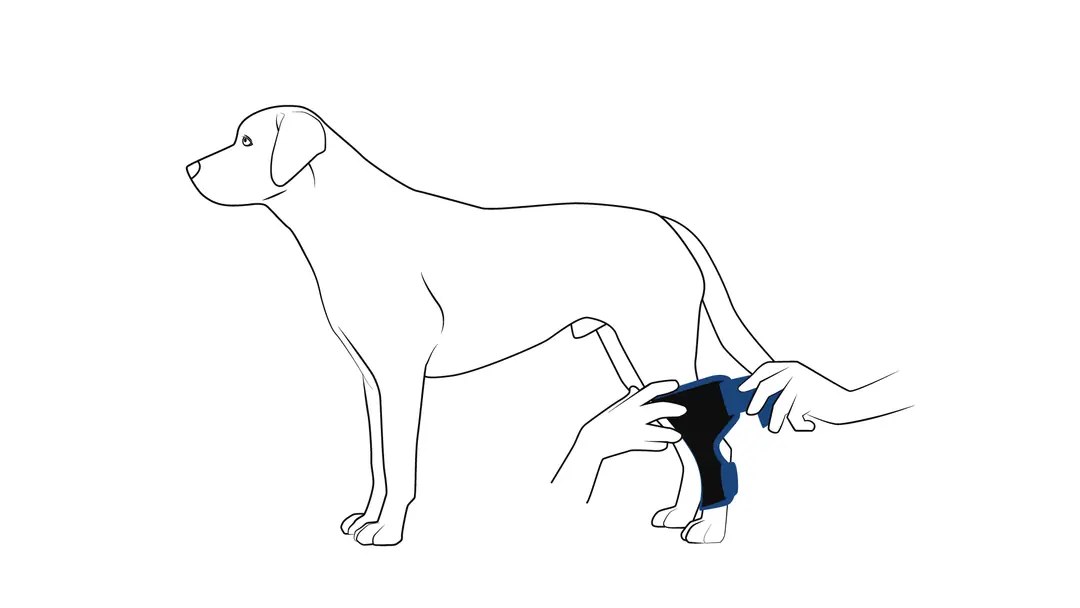
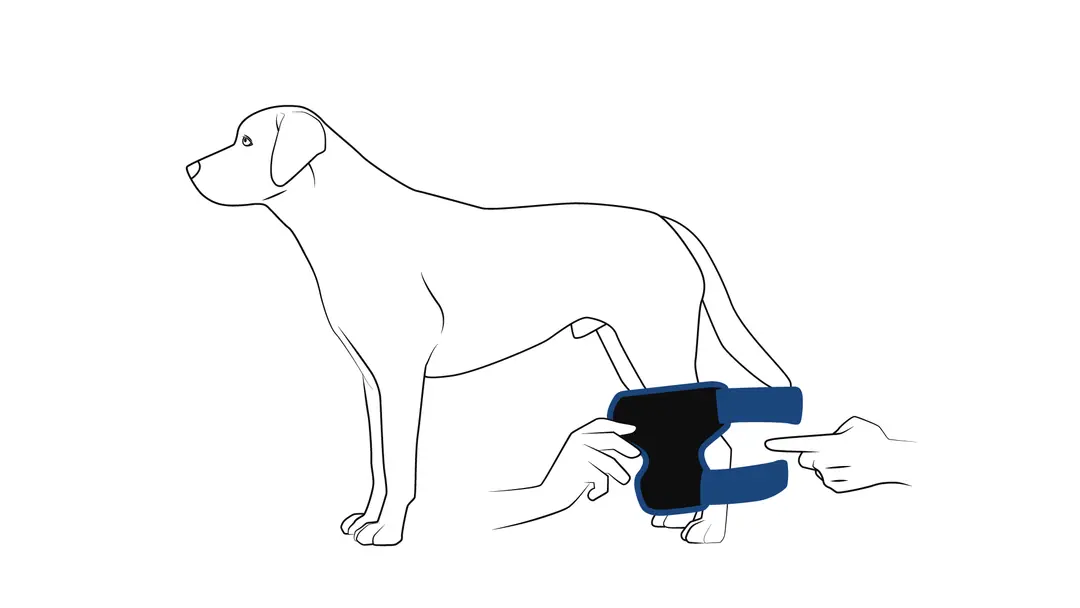
  1. Positioning the hock brace over the joint

    Step 1

    Center the brace over the hock joint.

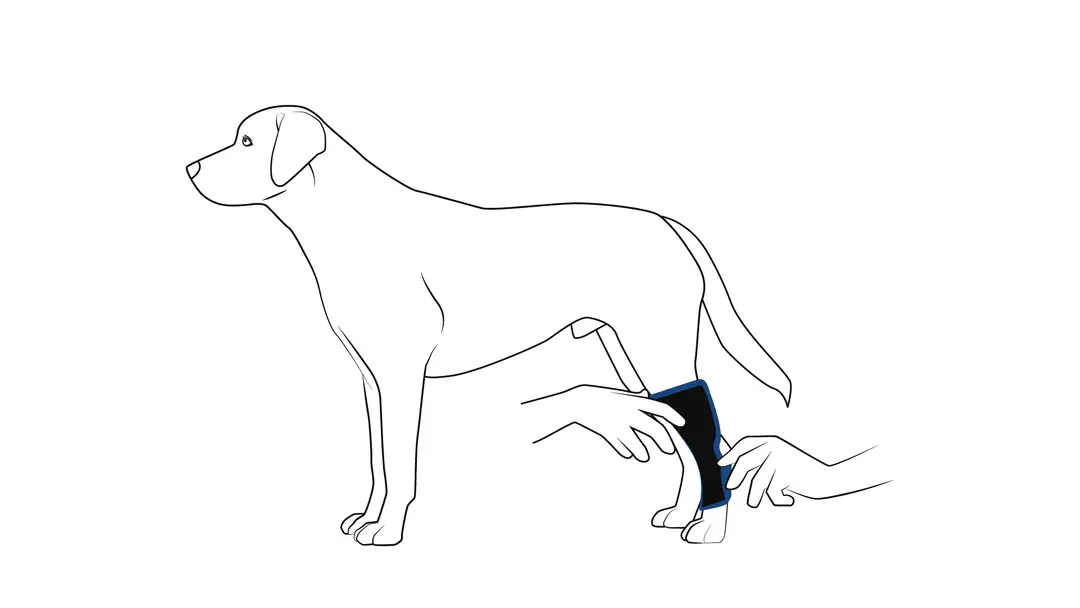
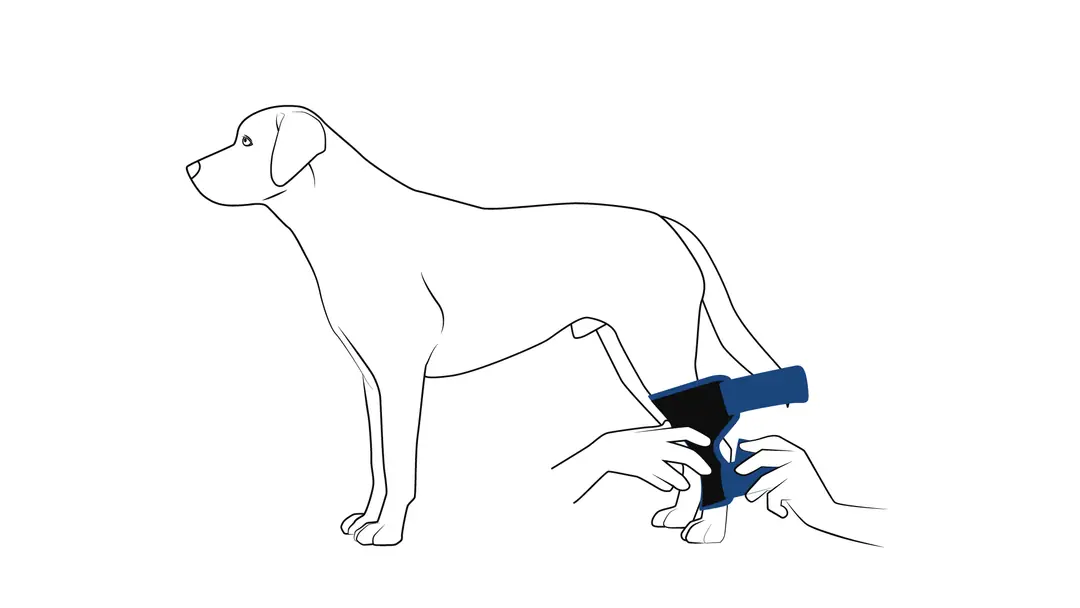
  2. Fastening the lower strap of the hock brace

    Step 2

    Wrap and fasten the lower strap around the leg just above the paw.

  3. Fastening the upper strap of the hock brace

    Step 3

    Wrap the upper strap around the leg to secure the brace.

  4. Readjusting the lower strap of the hock brace

    Step 4

    Check the lower strap again and adjust it so the brace does not slip.

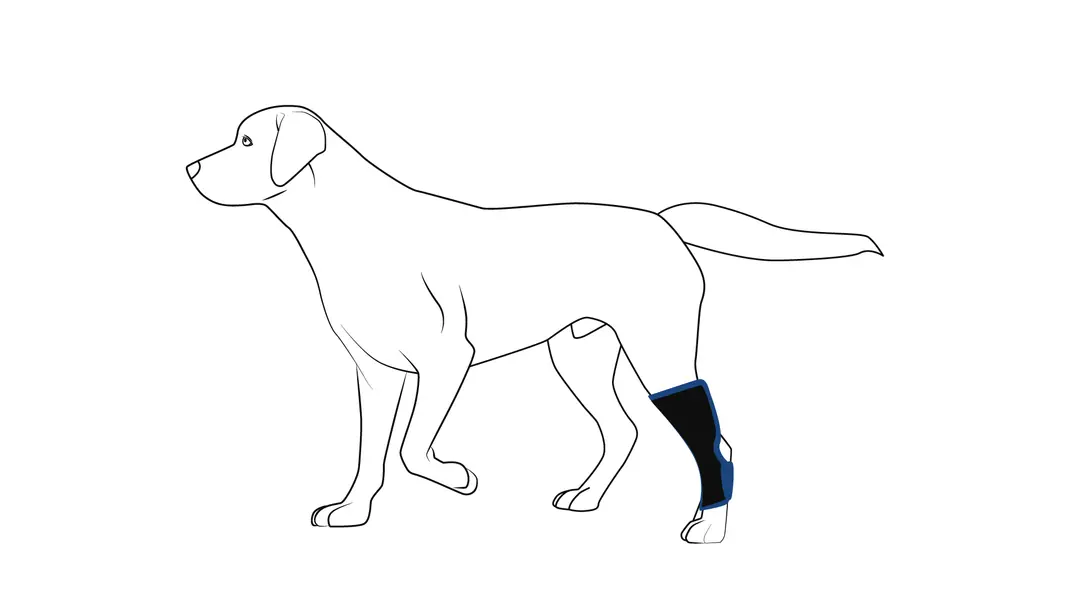
  5. Checking the hock brace fit while the pet walks

    Step 5

    If your veterinarian allows walking, let your pet take a few controlled steps and check the fit of the brace.

After fitting, check that the brace sits over the joint and the straps apply even pressure. Remove it if you notice rubbing, swelling, redness, or clear discomfort.

Use and care

Getting used to the brace

Introduce the brace to your pet in a calm setting. During the first uses, check its position over the joint, the fit of the straps, and the areas touching the skin. Let your pet get used to it only during activities approved by your veterinarian. Follow your veterinarian's plan for how long and how often to use it, and which splint to use.

After each use

  • Remove the brace and check the skin for redness, irritation, moisture, or rubbing.
  • Let the skin air out before the next use.
  • Remove the brace at night unless your veterinarian recommends a different schedule.
  • Stop use if you notice rubbing, swelling, or changes in walking or posture.
  • Follow your veterinarian's advice on duration and frequency of use.

Cleaning and storage

  • Remove the detachable splints and other parts before cleaning.
  • Hand wash the brace using only lukewarm water and mild soap.
  • Allow it to air dry completely before using it again.
  • Do not use a washing machine or tumble dryer.
  • Keep the brace away from direct sunlight and other heat sources.
  • Store it flat in a cool, dry place to help preserve its shape.

Frequently asked questions

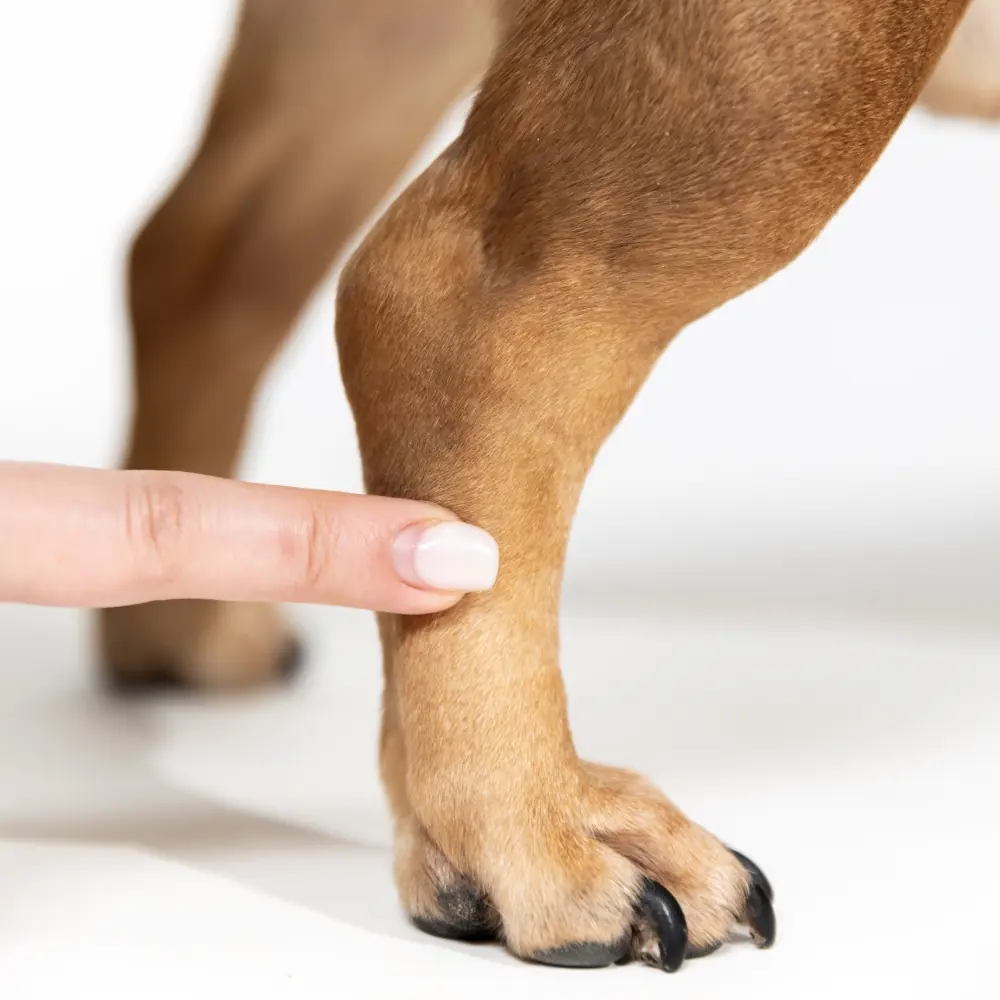
Where is the hock joint on a hind leg?

The hock, or tarsal joint, sits above the hind paw and is comparable to a human ankle. The knee is higher up the leg, so the two joints need different types of support.

How does a hock brace differ from a knee brace?

The hock brace targets the ankle joint above the hind paw, while the knee brace targets the knee joint higher up the leg. A veterinarian should determine which joint is causing the problem.

Does turning a hind paw inward mean a dog needs hock support?

That sign alone is not enough to tell. Turning the paw inward may result from a joint, muscle, tendon, or neurological problem, so a veterinarian should assess your dog before you choose a support.

How do I choose the right size?

Compare the circumference measurements taken below and above the hock joint with the size chart. Both measurements should match the same size, and the brace height should suit the leg. If more than one size seems suitable, or the measurements point to different sizes, contact us before ordering with the measurements and a photo.

Can this brace be used on a front leg?

No. The hock brace is shaped for the hind leg. For the carpal joint on a front leg, use the front leg ankle brace.

What if both hind ankles need support?

Each joint may need a different level of support. Have each leg assessed separately and decide with your veterinarian whether to use supports on both sides.

Get to Know Our Products

View Our Catalogue
logo