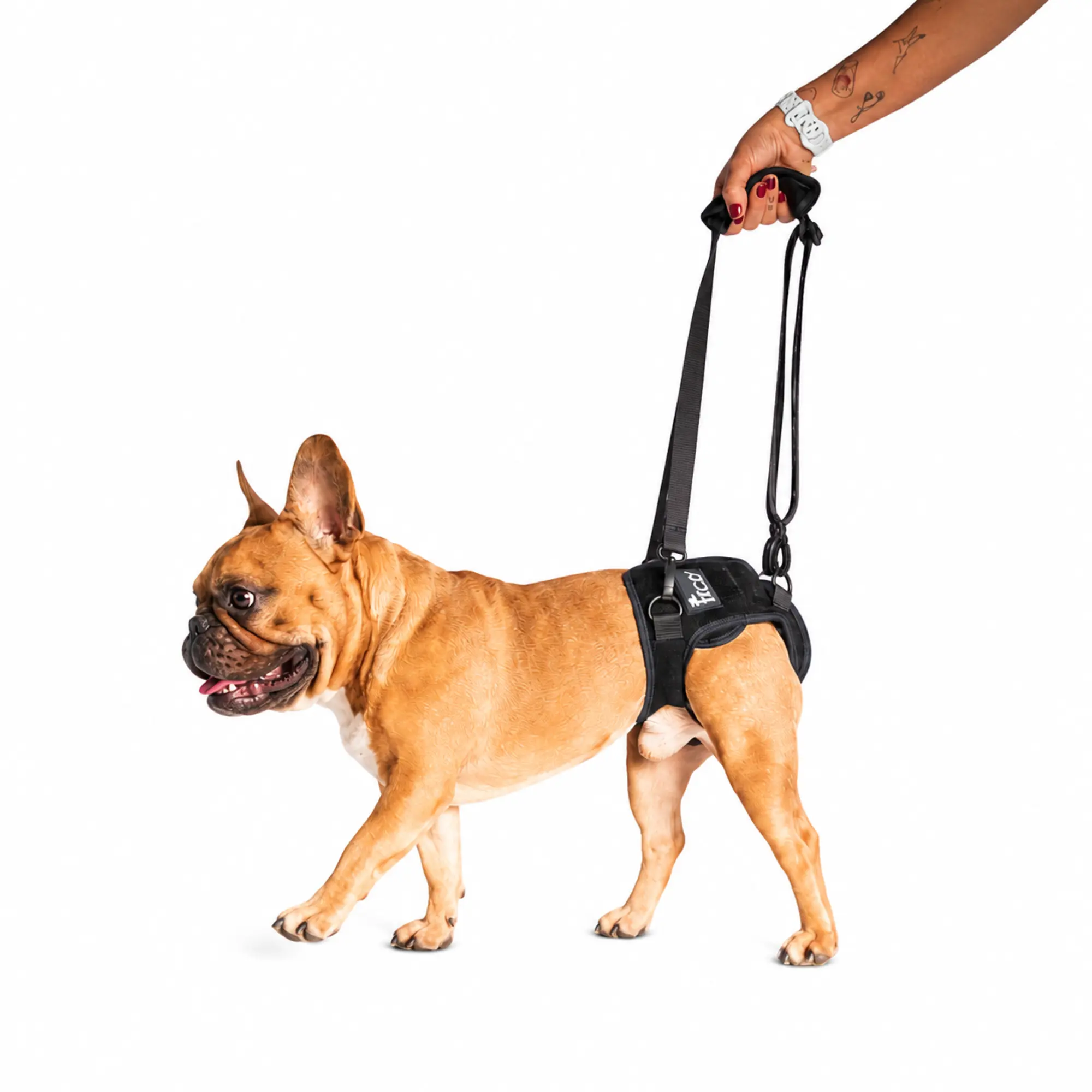
Assisted Walking Harness for Dogs

FICO

Assisted Walking Harness for Dogs

Beden
XS
S
M
L
XL
ADD TO BASKET

Find the right size

Measuring a dog’s upper-thigh circumference

Upper-thigh circumference

Measure around the upper thigh where the leg meets the hip, as shown in the image.

Measuring a dog’s belly circumference

Belly circumference

Measure around the belly at the point shown in the image.
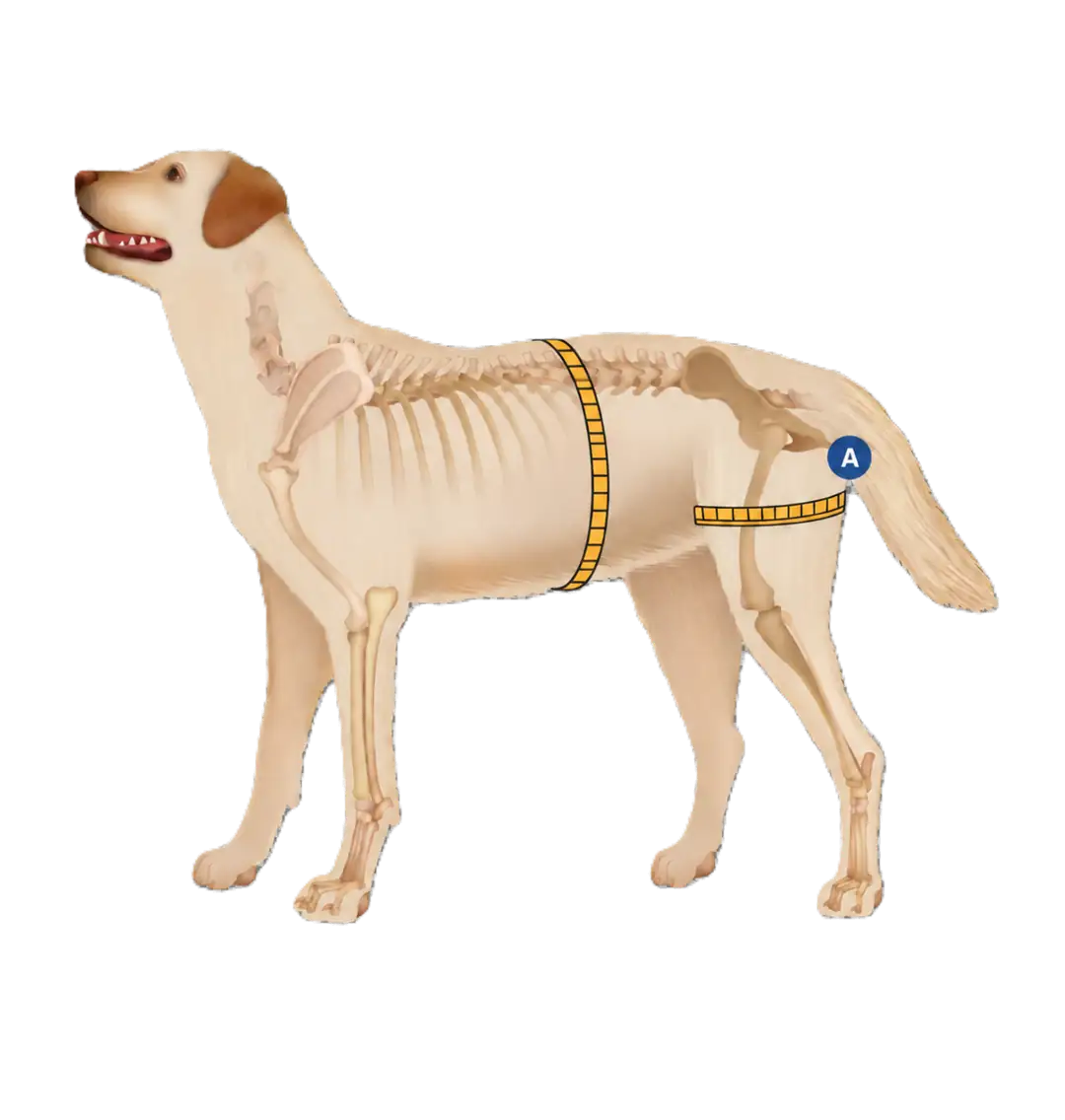
Upper-thigh and belly measurement points on a dog
SizeUpper thigh
circumference
Belly
circumference
XS8.3–10.2 in
21–26 cm
11.0–13.8 in
28–35 cm
S9.8–11.8 in
25–30 cm
12.6–15.7 in
32–40 cm
M12.2–15.0 in
31–38 cm
16.5–20.5 in
42–52 cm
L13.8–16.5 in
35–42 cm
19.7–24.4 in
50–62 cm
XL16.1–19.3 in
41–49 cm
23.6–28.7 in
60–73 cm

If both measurements do not match the same size, or your dog falls between sizes, do not automatically choose the smaller or larger size. Contact us with the measurements.
When to use the walking harness

The harness may be used to support controlled walking for dogs with hip dysplasia, arthritis, osteoarthritis, hind-leg weakness, or age-related mobility limitations.

Support on both sides of the hips

The wrap design helps apply balanced compression to both sides of the hip area.

Support for daily movement

It may help with steadier movement during walks, standing up, stair use, and short bathroom breaks.

Adjustable compression

Removable support pads allow the level of hip support to be adjusted as needed.

Ergonomic wrap design

The wrap surrounds the hips and lower back while leaving room for natural movement.

Use with a leash

The harness can be used with a leash during daily walks.

Durable, adjustable construction

Neoprene, strong hook-and-loop straps, and durable stitching help it fit different body shapes and support daily use.

The harness does not replace a veterinary examination or treatment. A veterinarian should advise whether it is suitable, the level of compression, and wear time. Before using it during bathroom breaks, check that the rear section and urination opening are correctly positioned. If the openings do not align, do not try to use it by shifting the harness; contact us with a photo for fit advice. If the product gets wet or dirty, remove and clean it, and let it dry completely before using it again.

Getting used to the harness video

How to fit the harness

Make sure you have the right size before fitting. Position the straps and support pads evenly without tightening them enough to restrict circulation or natural movement.

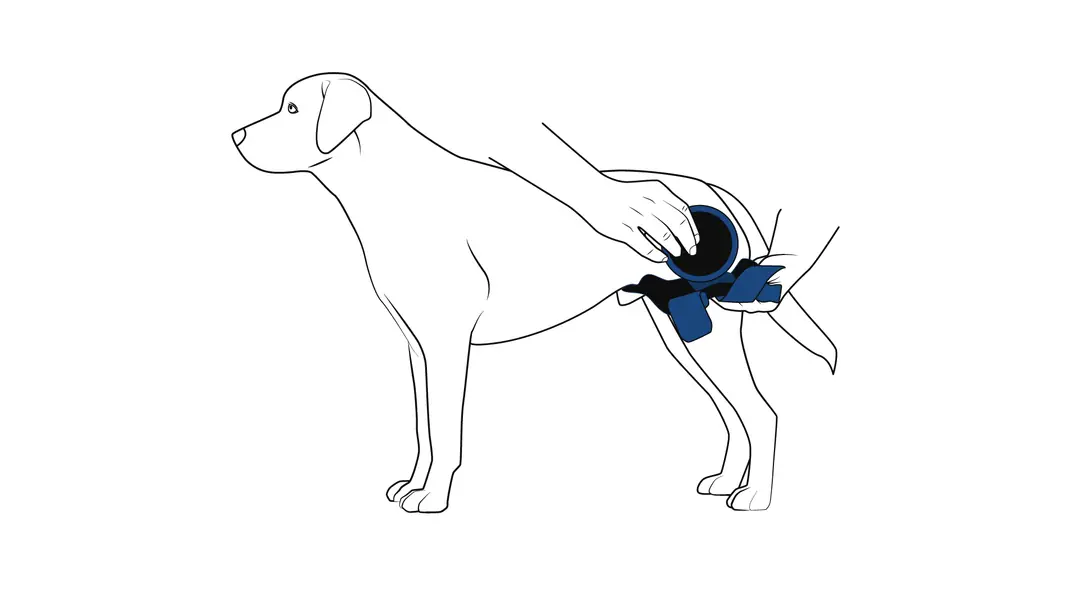
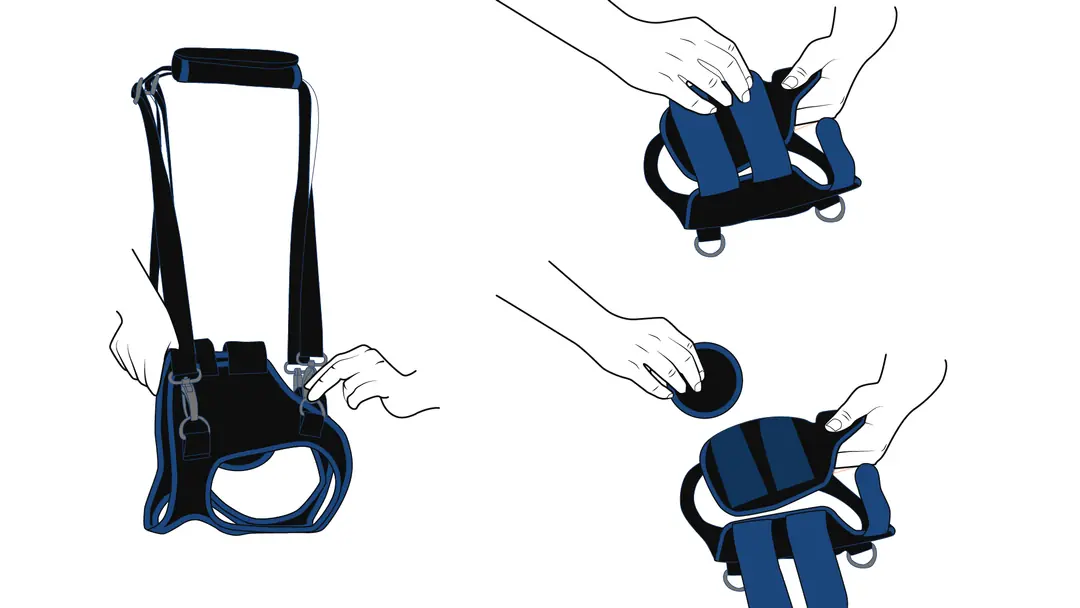
  1. Preparing the straps and support pads of the hip harness

    Step 1

    Open all the straps and remove the detachable support pads from the harness.

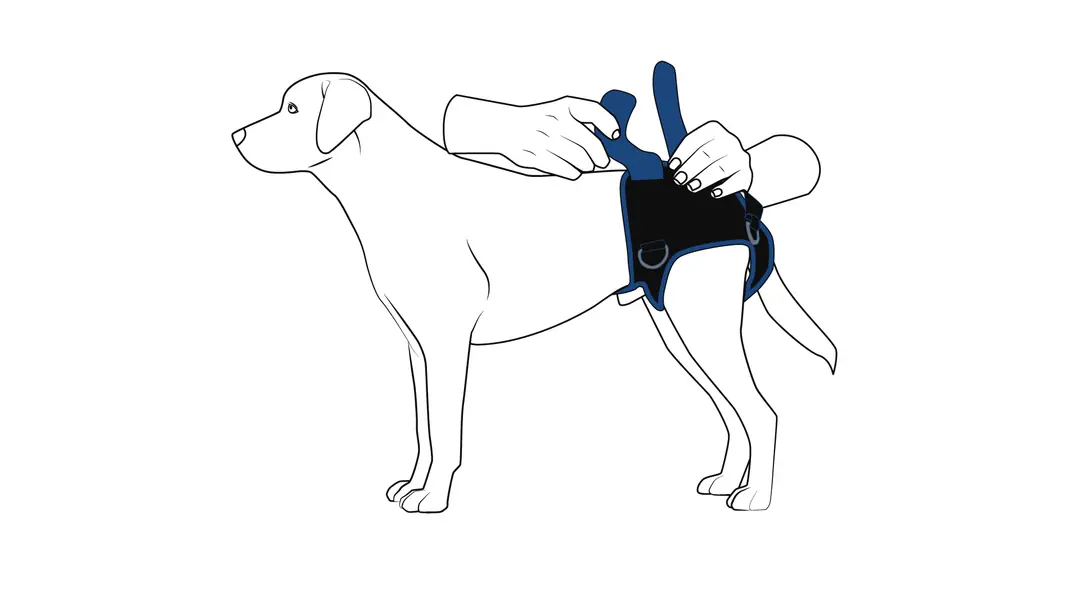
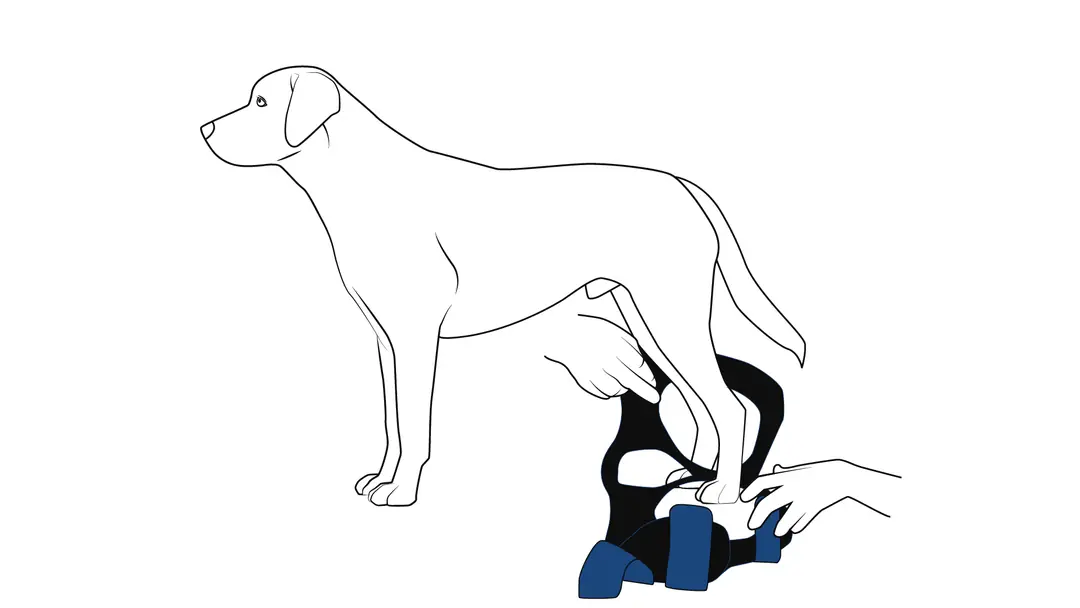
  2. Positioning the harness beneath the dog’s hips

    Step 2

    Pass the harness under your dog’s hips and center it.

  3. Placing the support pads over the hip bones

    Step 3

    Position the pads over the hip bones.

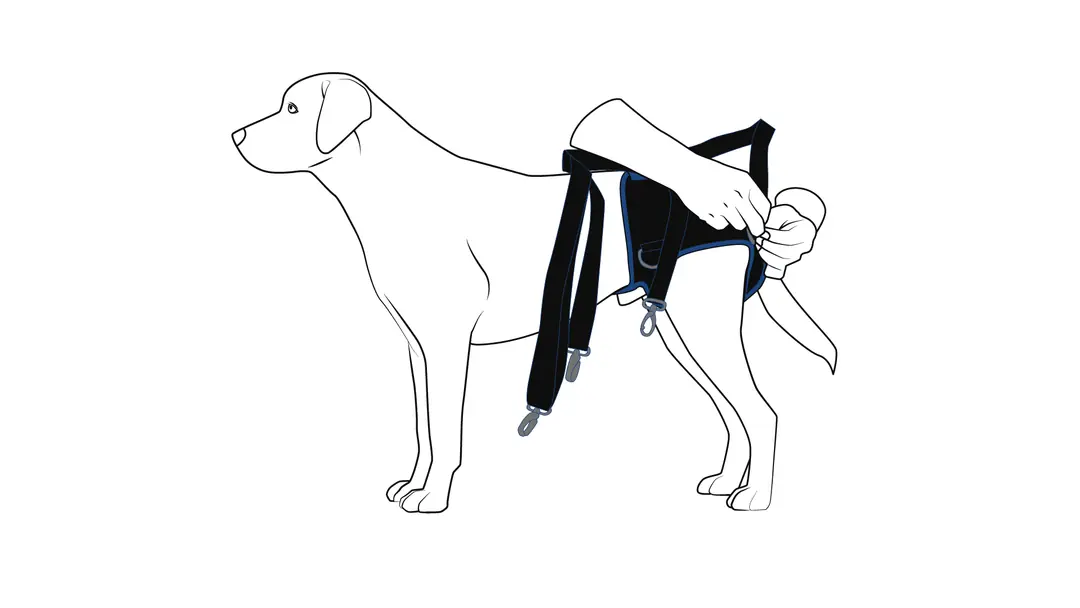
  4. Fastening the side straps around the body

    Step 4

    Pull the side sections upward and fasten the straps around the body.

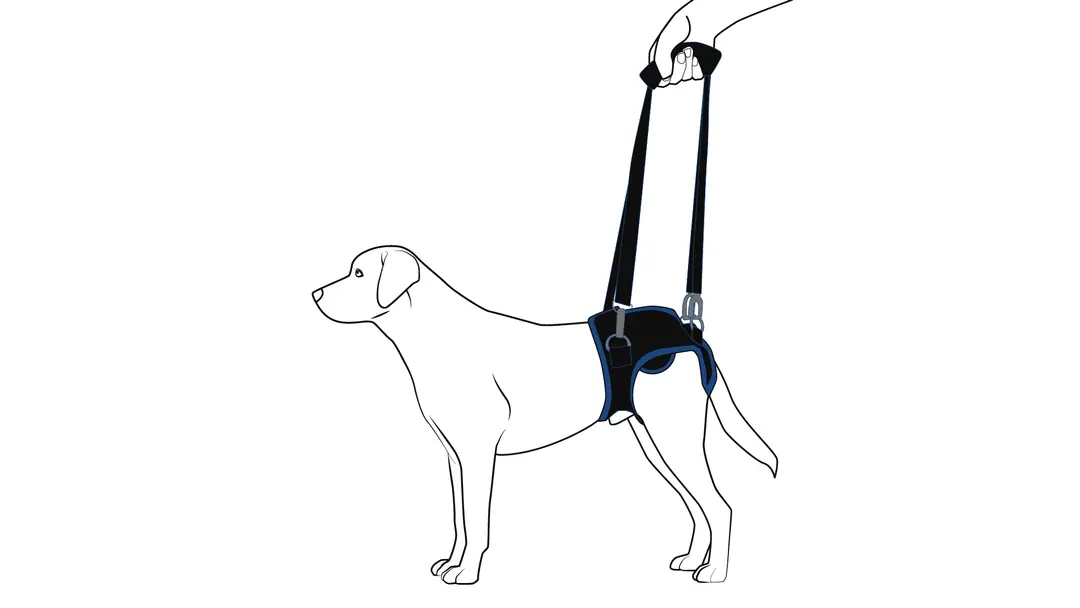
  5. Attaching the walking straps to the hip harness

    Step 5

    Attach the walking straps to their connection points and adjust them to equal lengths.

  6. Checking the final fit of the hip harness

    Step 6

    Check the fit. The harness should stay in place while your dog moves comfortably.

After fitting, check that the pads sit over the hip bones and the straps are even on both sides. Remove the harness if you notice rubbing, redness, or marked discomfort. Before using it during bathroom breaks, check that the rear section and urination opening are correctly positioned. If the openings do not align, do not try to use it by shifting the harness; contact us with a photo for fit advice. If the product gets wet or dirty, remove and clean it, and let it dry completely before using it again.

Use and care

Getting your dog used to the harness

Introduce the harness in a calm setting. During the first uses, watch its fit and your dog’s response closely. Help your dog adjust during activities approved by your veterinarian, and follow the recommended plan for wear time and activity level.

Follow your veterinarian’s advice on walking and wear time. Stop using the harness if rubbing or discomfort develops.

After each use

  • Remove the harness and check the skin for redness, irritation, moisture, or rubbing.
  • Let the skin breathe before putting the harness on again.
  • Remove the harness at night unless your veterinarian recommends another schedule.
  • Stop using it if you notice rubbing, swelling, or changes in gait or posture.
  • Follow your veterinarian’s advice on wear time and frequency.

Cleaning and storage

  • Remove detachable support pads and other parts before cleaning.
  • Hand wash only with lukewarm water and mild soap.
  • Allow it to air dry completely before using it again.
  • Do not machine wash or tumble dry.
  • Keep it out of direct sunlight and away from other heat sources.
  • Store it flat in a cool, dry place to help retain its shape.

Frequently asked questions

How does the walking harness differ from a lifting support?

The harness provides compression around the hips to support controlled movement. A lifting support helps you support some of your dog’s weight and assist them in standing up.

Does the harness support one hip or both?

The product wraps around the hip area and supports both sides. If your dog has a problem on only one side, ask your veterinarian about an appropriate level of compression.

Which product is more suitable for a dog with hip dysplasia that cannot stand up?

For a dog that has significant difficulty supporting its own weight, a lifting support may be more suitable. Choose between the walking harness and lifting support based on the dog’s mobility.

Can I choose the size based on weight alone?

No. Dogs of the same weight can have different upper-thigh and belly circumferences. Measure both at the points shown in the guide and compare them together with the size chart. If they do not match the same size, contact us before ordering.

Is the harness suitable for large breeds?

Suitability does not depend on breed alone. The harness may be considered for large dogs such as Labradors, German Shepherds, or Cane Corsos if their measurements fit the available size ranges.

Does it treat hip dysplasia?

No. The harness does not reshape the hip joint or treat the condition. It may provide additional support alongside a veterinarian’s treatment, weight-management, and rehabilitation plan.

Get to Know Our Products

View Our Catalogue
logo