Knuckling Brace for Cats & Dogs

Knuckling Brace for Cats & Dogs

Beden
XS
S
M
L
XL
WhatsApp
ADD TO BASKET

Find the right size

Measuring the lower leg circumference above the paw

Lower leg circumference

Measure around the lower leg just above the paw.

Lower leg circumference measurement point above the paw
SizeLower leg
circumference
Brace
height
XS2.4–3.1 in
6–8 cm
2.0 in
5 cm
S3.1–4.7 in
8–12 cm
2.8 in
7 cm
M4.7–5.5 in
12–14 cm
3.5 in
9 cm
L5.5–6.7 in
14–17 cm
4.7 in
12 cm
XL6.7–7.9 in
17–20 cm
5.5 in
14 cm

When to use the knuckling brace

The knuckling brace may be used when a pet has difficulty placing a paw naturally because of knuckling, paw dragging, nerve injury, or muscle weakness.

A more natural paw position

Helps guide the paw toward a more natural angle against the ground for controlled placement.

Knuckling support

Designed to help guide the toes in the correct direction when the pet places weight on the top of the paw.

Less nail dragging

Helps reduce toe catching and nail dragging along the ground.

Soft under-paw pad

The soft support pad provides flexible protection under the paw instead of a rigid shoe.

Adjustable hook-and-loop straps

The straps can be adjusted to the leg circumference and coat to help keep the brace in place.

Flexible neoprene construction

Flexible neoprene conforms to the leg and is intended to provide comfort during daily use and rehabilitation.

The brace does not replace veterinary examination or treatment. A veterinarian should assess the cause of knuckling or paw dragging, the correct size, and duration of use.

Getting used to the brace: video

How to fit the brace

Make sure you have the correct size before fitting. The straps should hold the brace in place and guide the paw toward a natural position without restricting circulation.

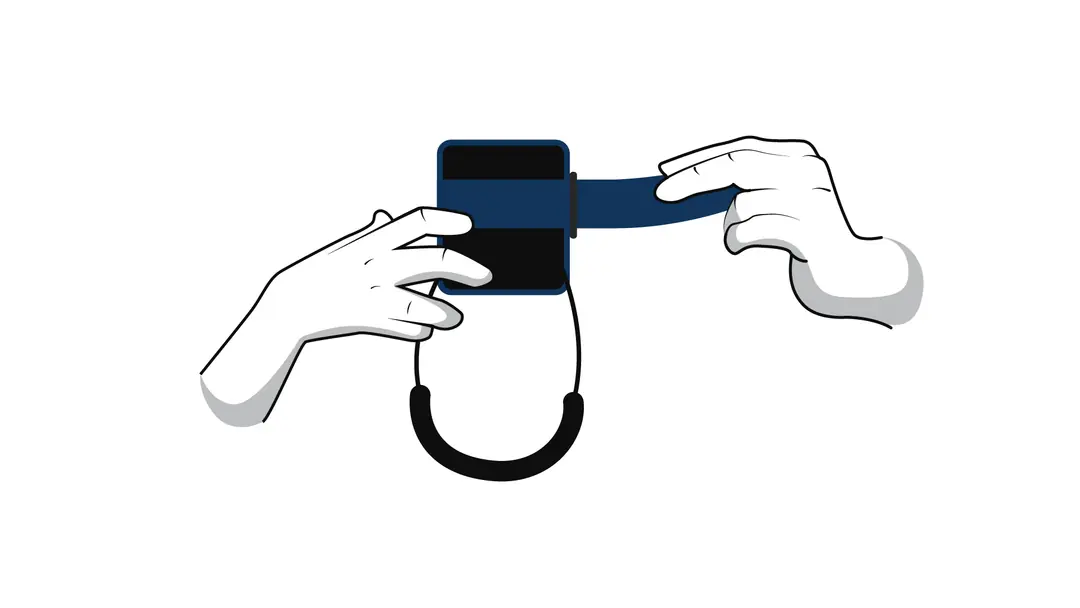
  1. Opening the straps of the knuckling brace

    Step 1

    Fully open the straps and hook-and-loop fasteners.

  2. Positioning the knuckling brace over the ankle joint

    Step 2

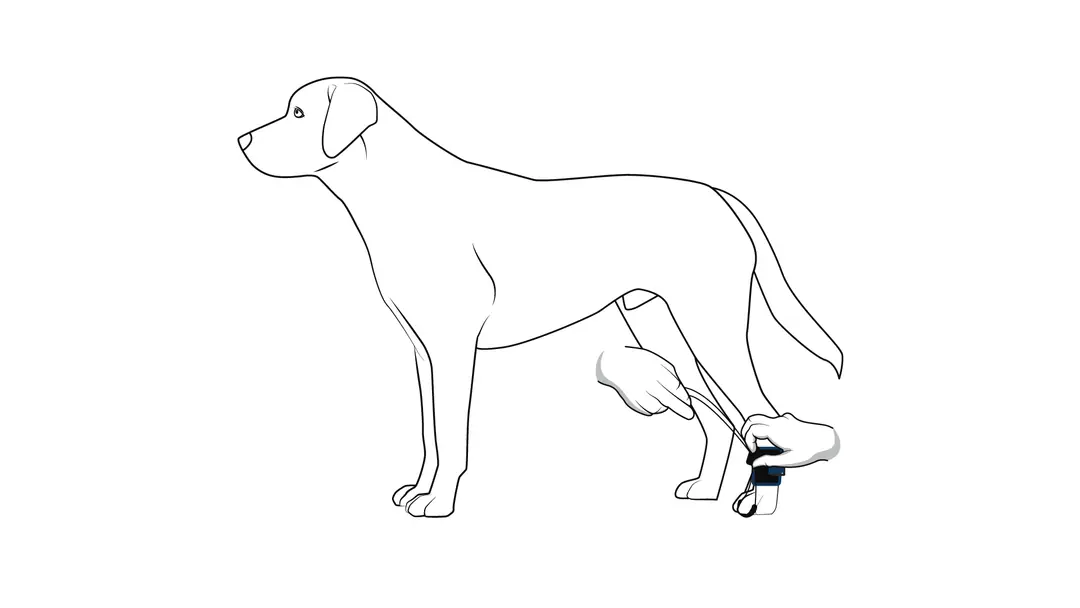
    Slide your pet’s leg through the brace and position it over the ankle joint.

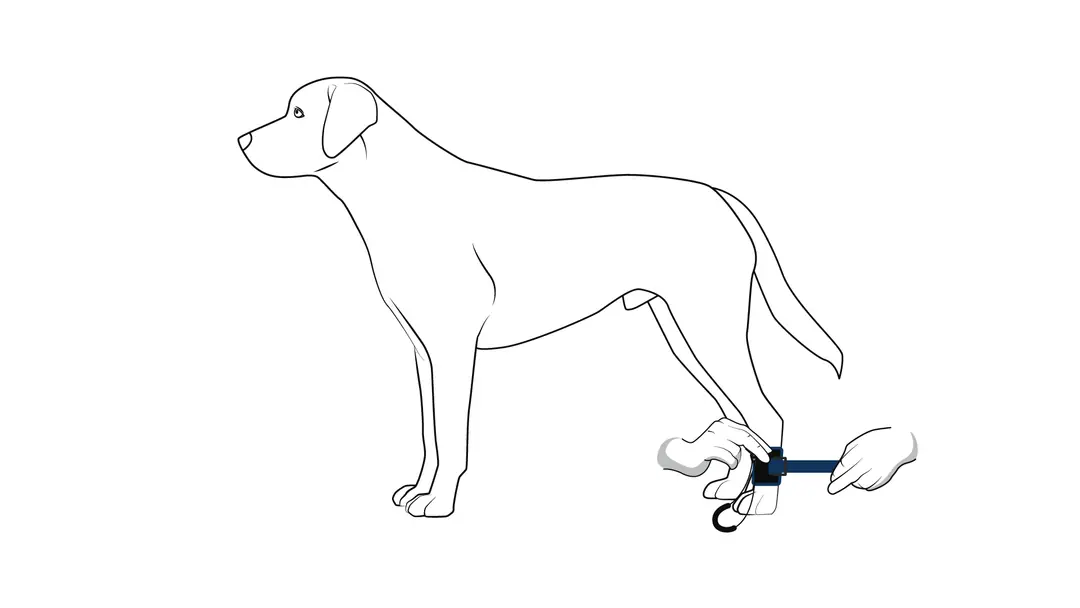
  3. Fastening the knuckling brace straps around the leg

    Step 3

    Wrap the hook-and-loop straps around the leg and fasten them securely.

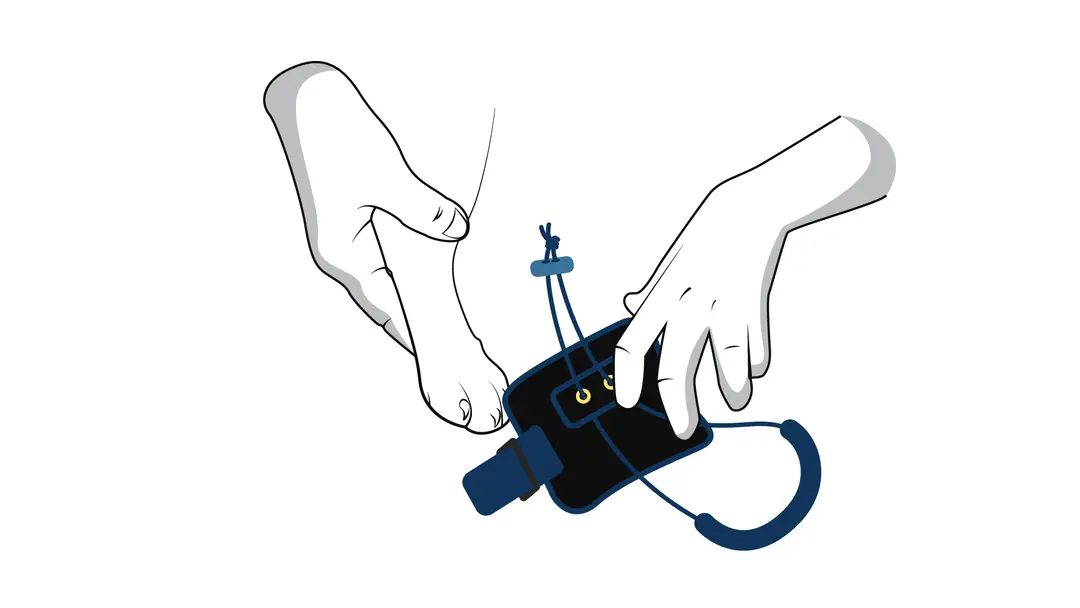
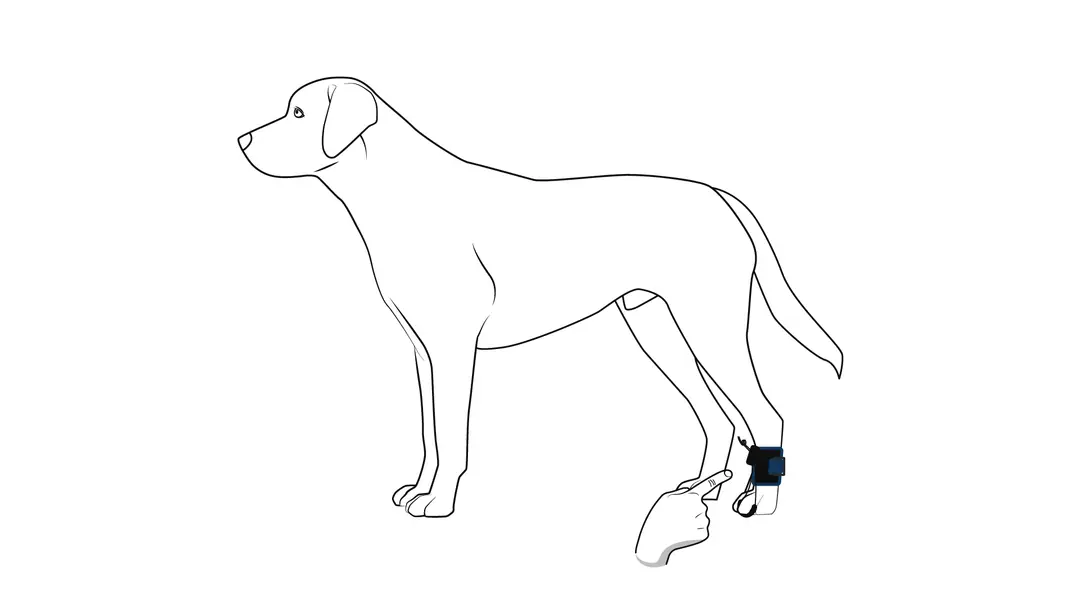
  4. Positioning the soft support pad under the toes

    Step 4

    Place the soft pad under the toes so it guides the paw upward.

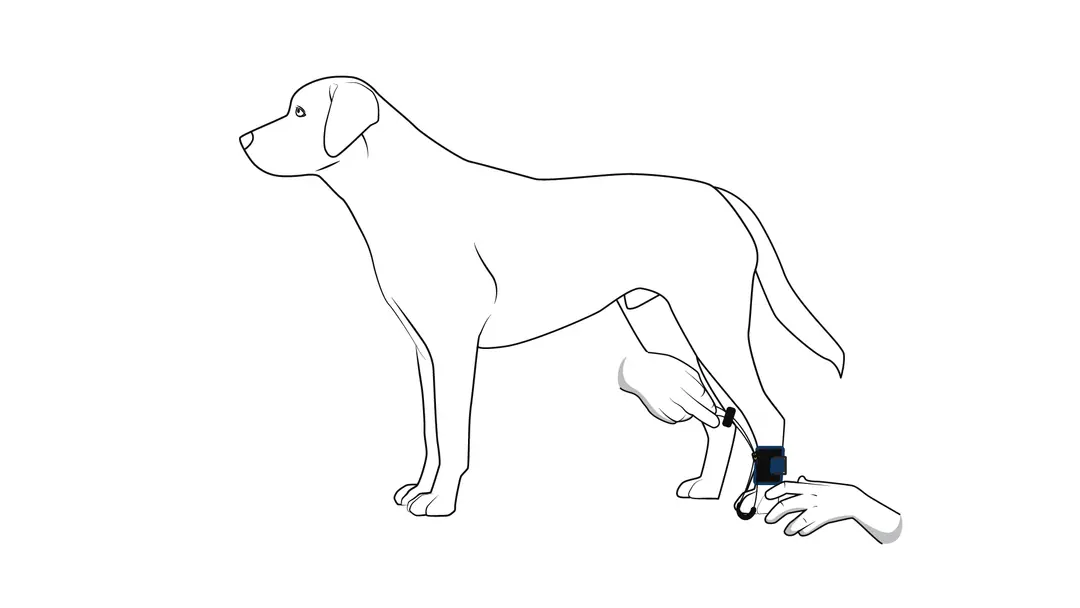
  5. Adjusting the tension of the upper connection

    Step 5

    Adjust the upper connection tension to guide the paw toward a natural weight-bearing position.

  6. Trimming excess strap length on the knuckling brace

    Step 6

    Once you have finalized the fit, you may carefully trim any unused strap length.

Let your pet take a few controlled steps. The paw should move toward a natural position, and the brace should not slip, rub, or pull the toes too far upward.

Use and care

Getting used to the brace

Introduce the brace to your pet in a calm setting. During the first uses, watch its fit and your pet’s response closely. Let your pet get used to it during movements approved by your veterinarian, and follow the plan for wear time and activity level.

Follow the rehabilitation plan set by your veterinarian. Check paw position and skin contact each time.

After each use

  • Remove the brace and check the skin for redness, irritation, moisture, or rubbing.
  • Let the skin air out before the next use.
  • Remove the brace at night unless your veterinarian recommends a different schedule.
  • Stop use if you notice rubbing, swelling, or changes in walking or posture.
  • Follow your veterinarian’s advice on duration and frequency of use.

Cleaning and storage

  • Remove detachable parts before cleaning.
  • Hand wash the brace using only lukewarm water and mild soap.
  • Allow it to air dry completely before using it again.
  • Do not use a washing machine or tumble dryer.
  • Keep the brace away from direct sunlight and other heat sources.
  • Store it flat in a cool, dry place to help preserve its shape.

Frequently asked questions

What is the difference between knuckling and ordinary limping?

Knuckling is when a pet places weight on the top of the paw instead of the pad or cannot straighten the toes. Limping can have many causes, including pain and joint or soft tissue problems.

Can the brace be used on front and hind paws?

With the right size and fit, it may be considered for an affected front or hind paw. A veterinarian should assess which nerve or muscle group is causing the problem.

Is it suitable for cats?

It may be suitable for a cat if the size and anatomical fit are right. Because cats can have different body proportions, check the measurements before ordering. If needed, contact the Fico team for fit advice.

How does a knuckling brace differ from a dog boot?

A dog boot primarily protects the paw from external surfaces. The knuckling brace helps guide the toes toward a more natural position when a pet knuckles.

How do I choose the right size?

Measure around the lower leg just above the paw. If you are unsure about the brace height or how the paw should fit, send us a photo for a fit check.

Does the brace treat the neurological cause of knuckling?

No. The brace supports paw position and placement, but it does not treat nerve damage, spinal disease, or other neurological causes.

Get to Know Our Products

View Our Catalogue
logo