


Find the right size

Back length
Measure from the base of the neck to the base of the tail.

| Size | Back length |
|---|---|
| XS | 9.8–11.0 in 25–28 cm |
| S | 11.4–12.6 in 29–32 cm |
| M | 13.0–14.2 in 33–36 cm |
| L | 14.6–16.1 in 37–41 cm |
| XL | 16.5–18.1 in 42–46 cm |
Measure from the base of the neck to the base of the tail.
| Size | Back length |
|---|---|
| XS | 9.8–11.0 in 25–28 cm |
| S | 11.4–12.6 in 29–32 cm |
| M | 13.0–14.2 in 33–36 cm |
| L | 14.6–16.1 in 37–41 cm |
| XL | 16.5–18.1 in 42–46 cm |
With a veterinarian’s guidance, the back brace may be used to support the spine during care for IVDD, slipped discs, arthritis, spinal conditions, and recovery after surgery.
It may help support the spine and limit sudden, uncontrolled back movements.
It may provide additional support alongside the postoperative care and rehabilitation plan set by a veterinarian.
Rigid support elements help keep the spine in a more controlled position.
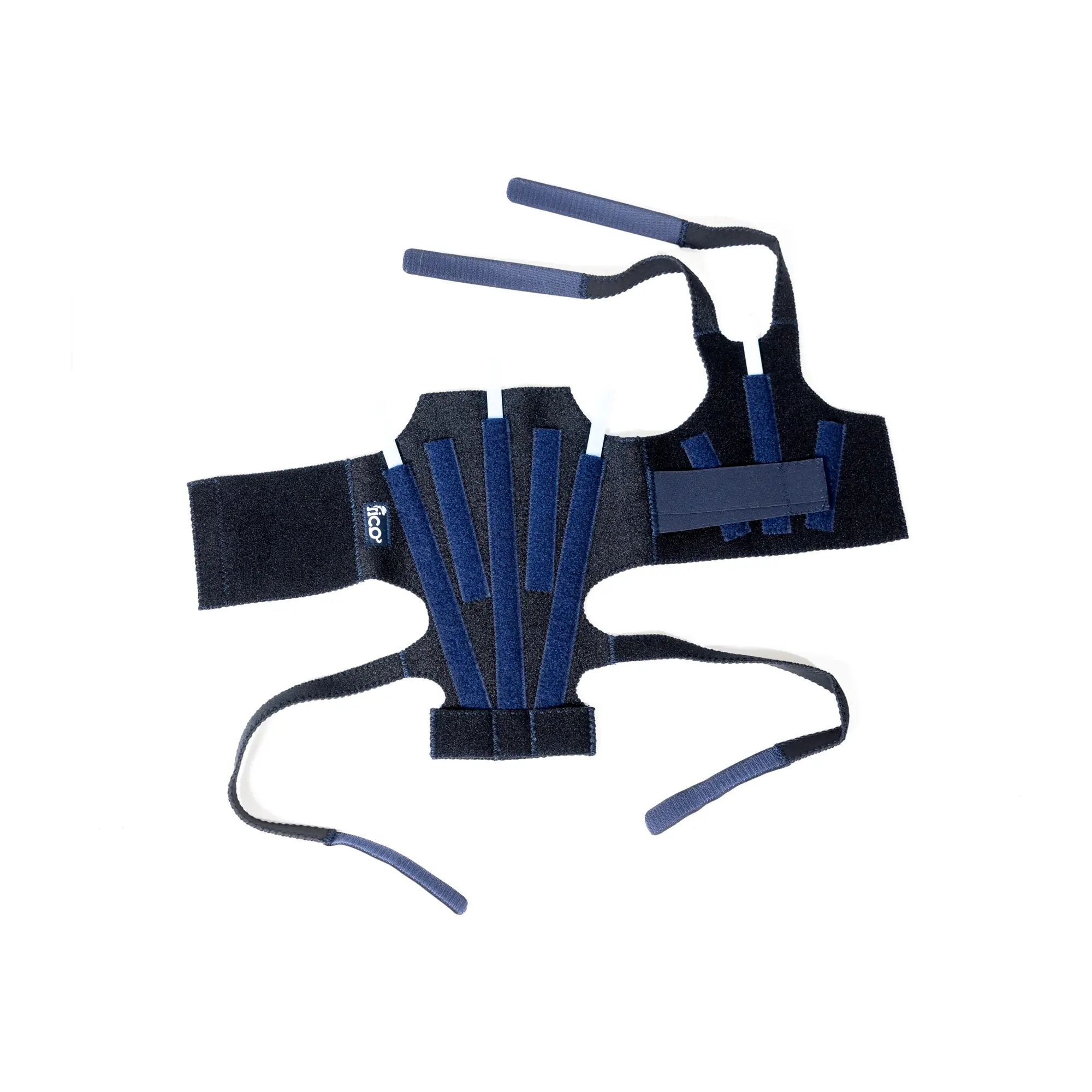
Wide hook-and-loop straps and a range of sizes help you adjust the brace to your pet’s body.
Soft neoprene and reinforced stitching provide comfort and durability for daily use.
The water-resistant, hand-washable material makes regular cleaning easier.
The back brace does not replace a veterinary examination or treatment. A veterinarian should decide whether and how long to use it, especially when neurological signs are present or after surgery.
Getting used to the brace videoMake sure the brace is the right size. The straps should hold it in place without restricting breathing, circulation, or natural movement.
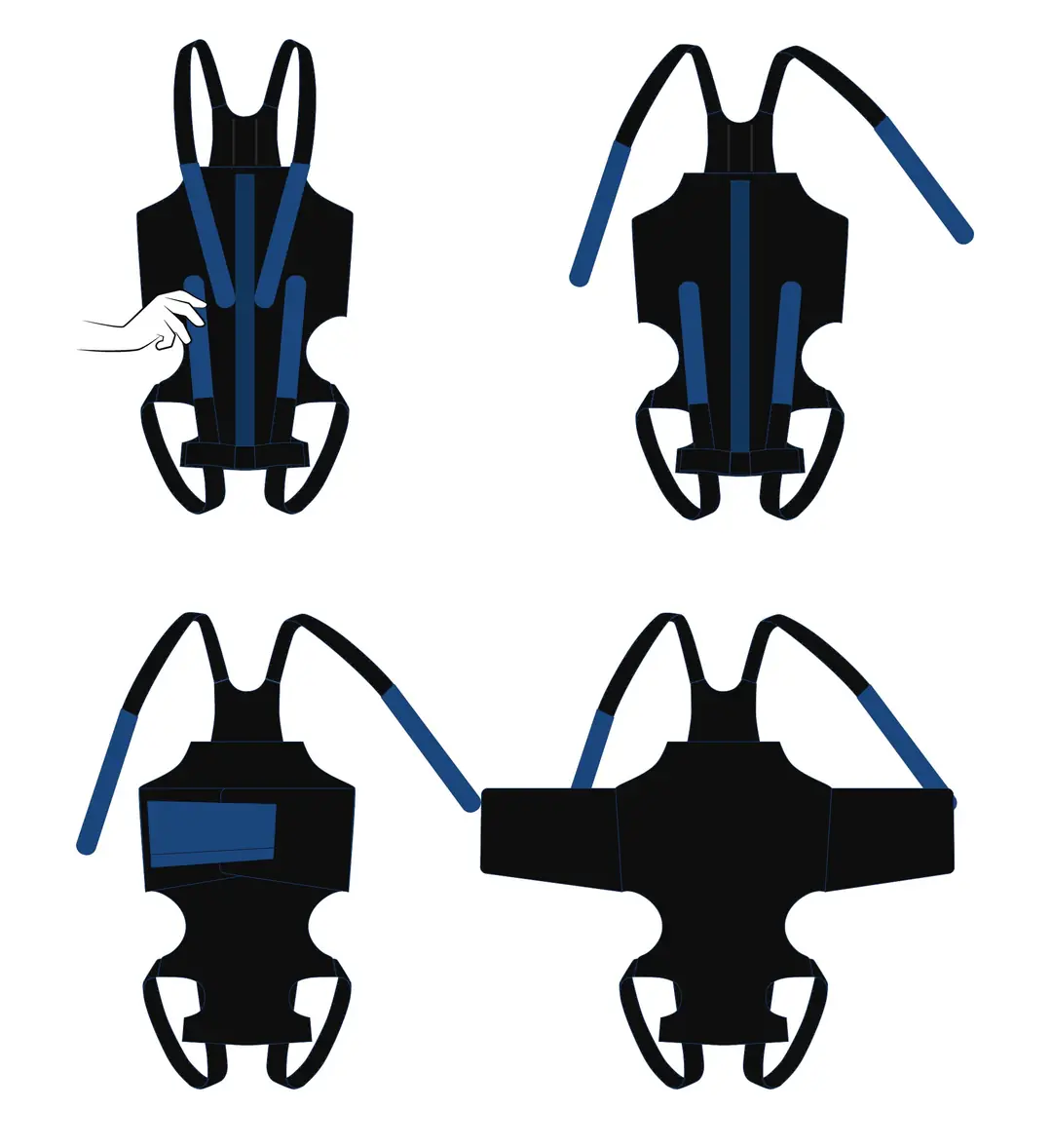
Carefully thread your pet’s hind legs through the brace’s leg straps.
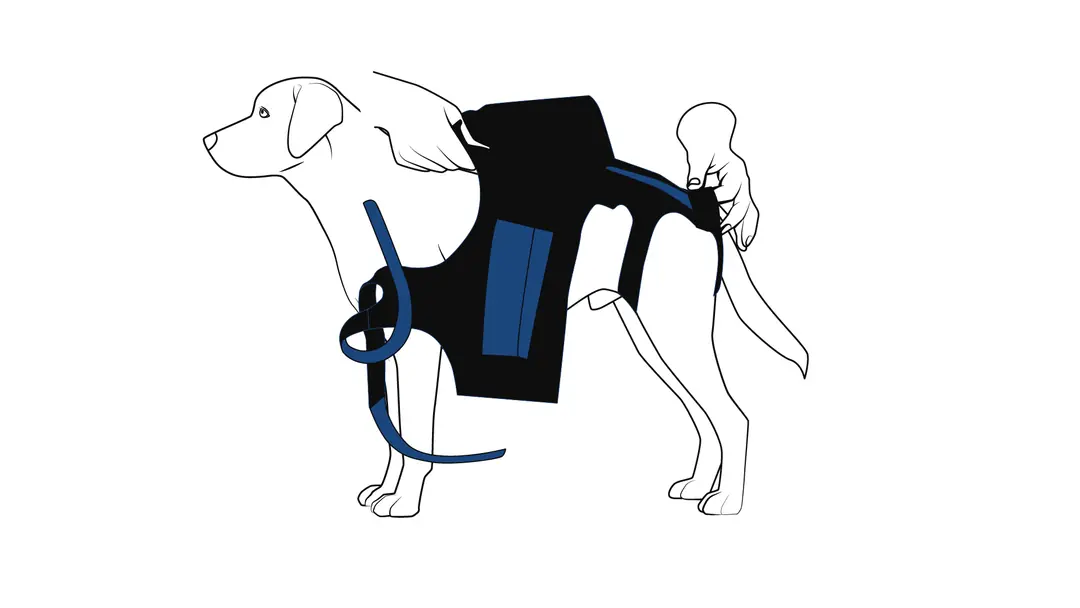
Cross the neck straps over the shoulders and fasten them.
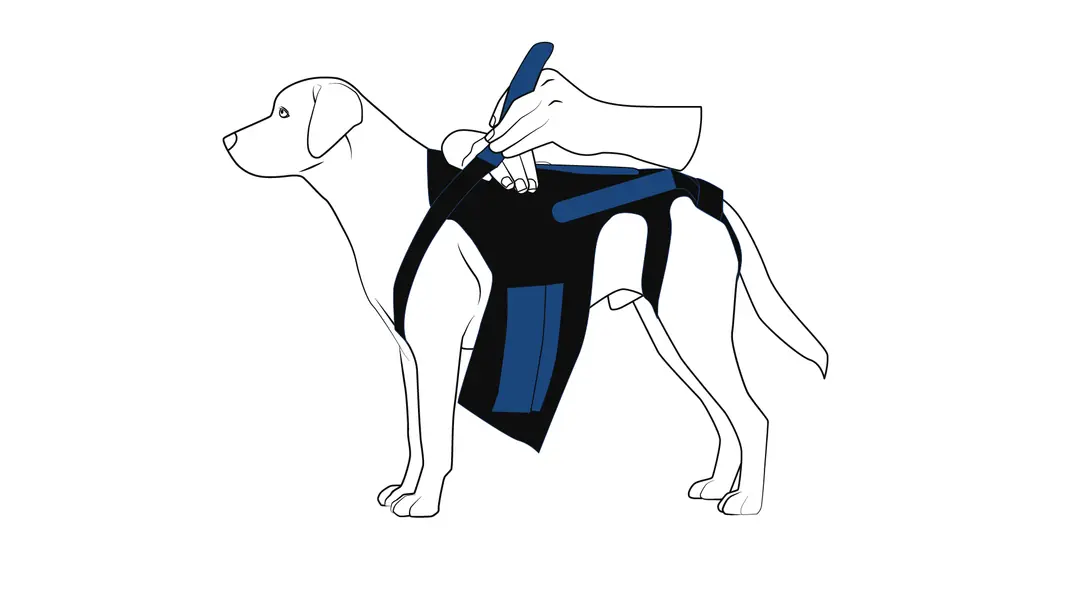
Pass the neoprene belly strap under the body and fasten it.
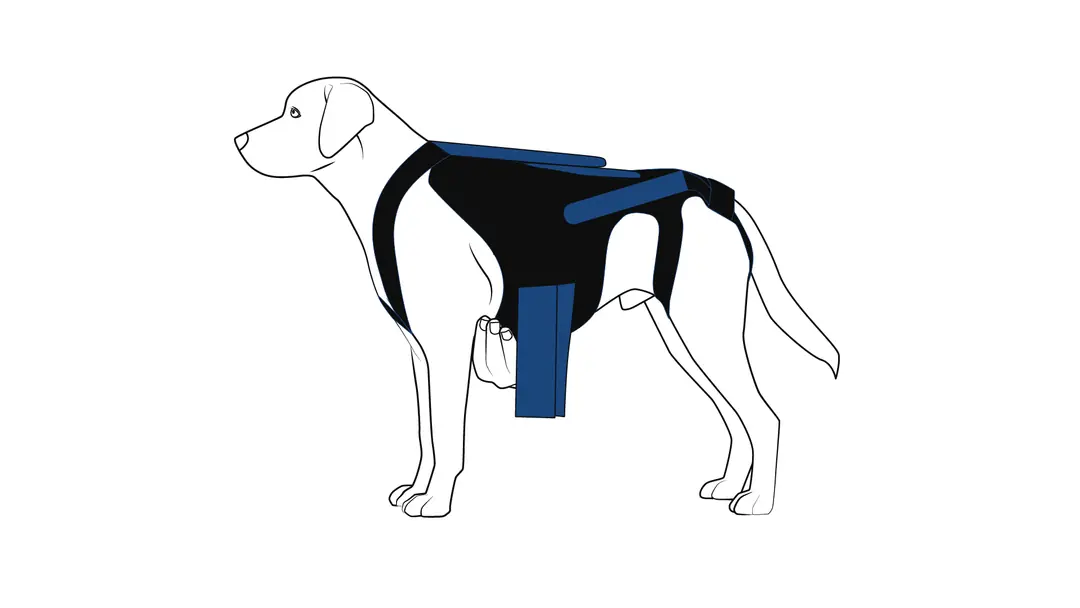
Fasten the flexible belly strap so the brace sits evenly on the body.
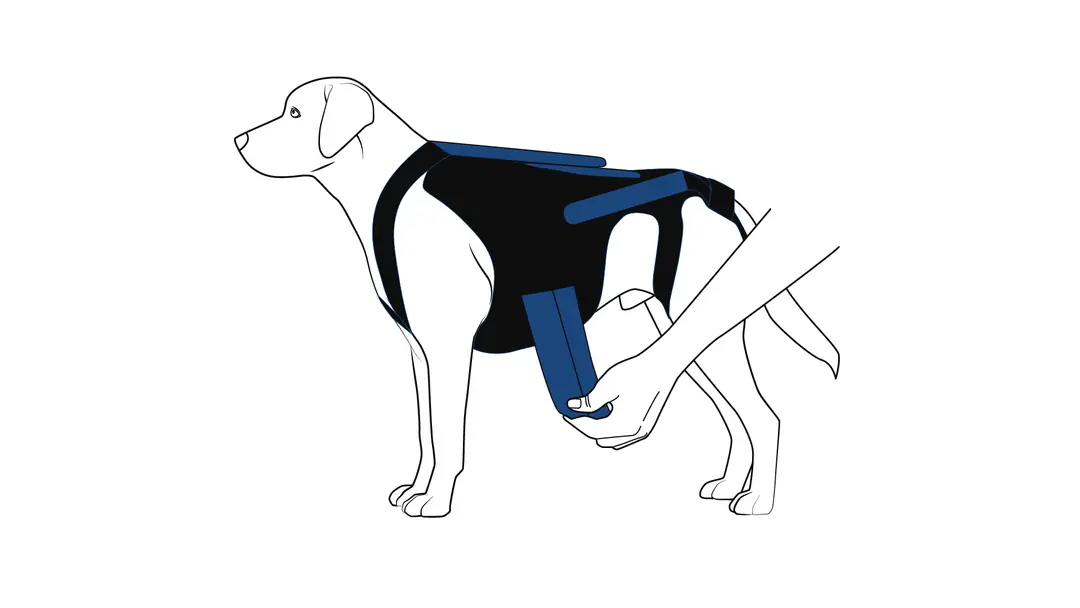
Adjust the hind-leg straps so they do not restrict movement or cause rubbing.
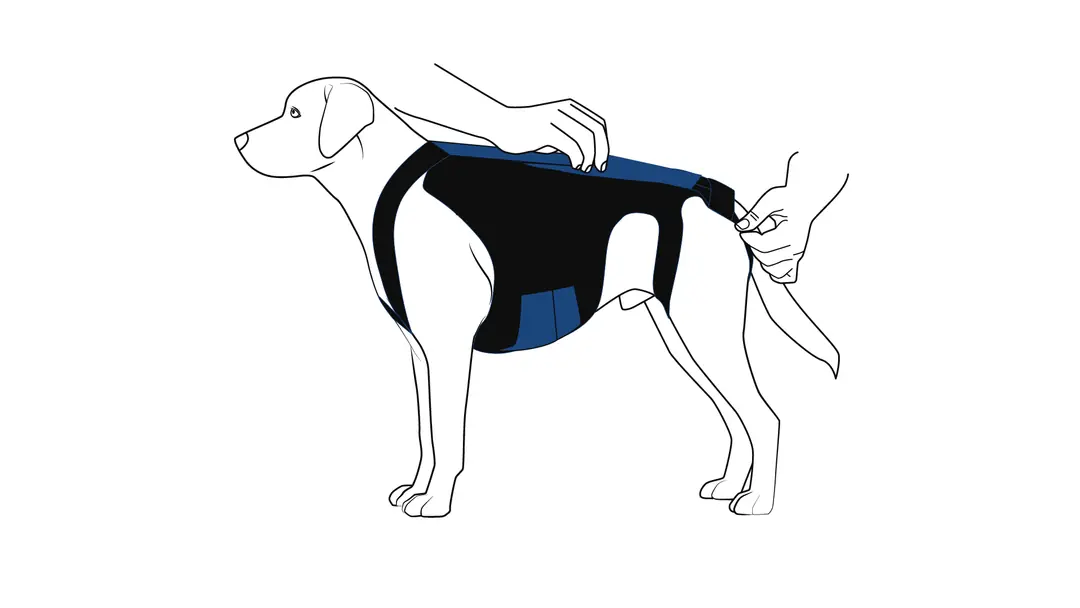
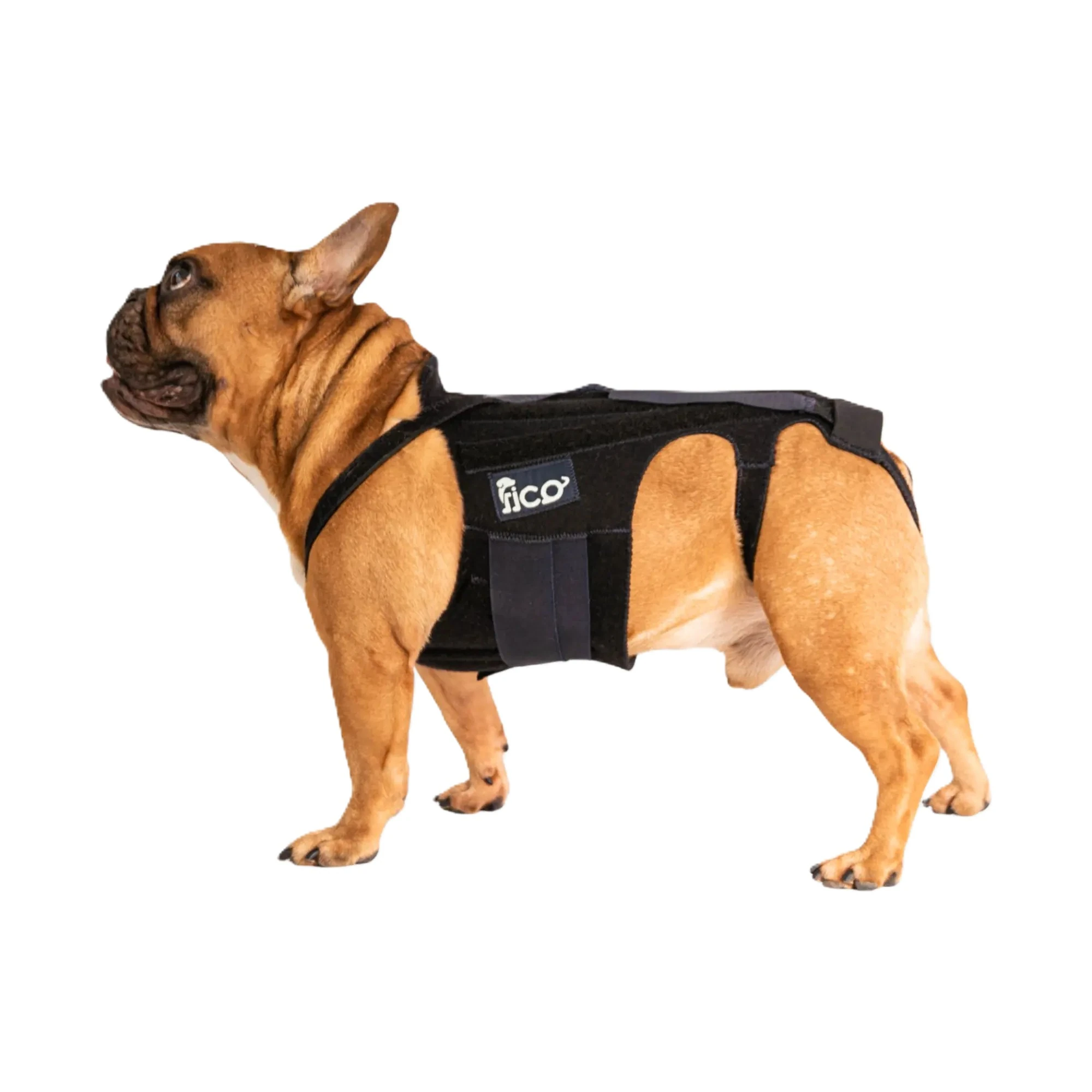
Check every strap. The brace should fit snugly but comfortably and should not slide along the spine.
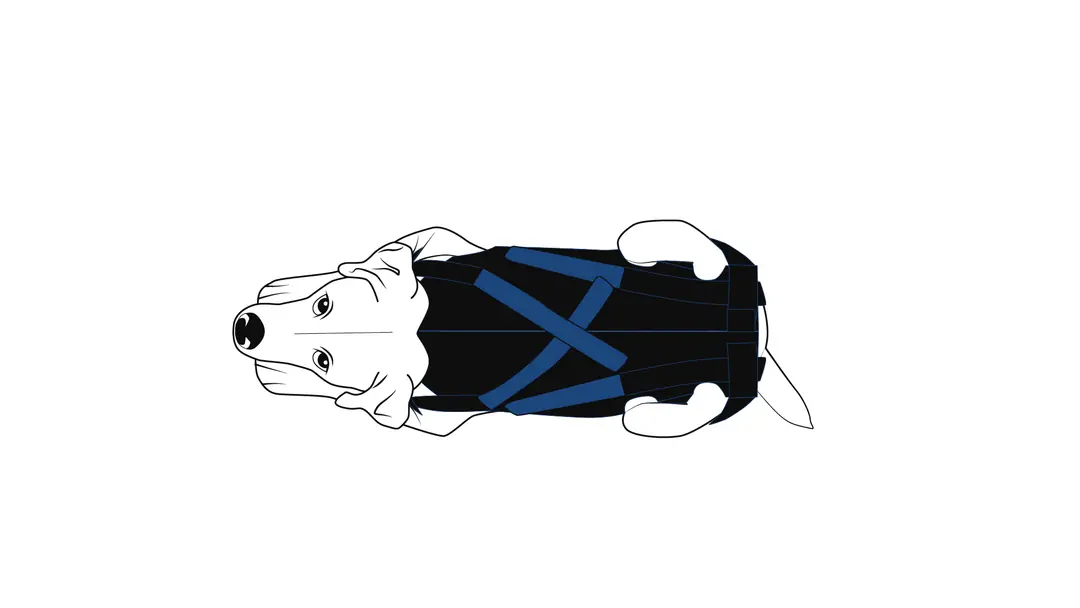
The brace should fit as shown in these images.
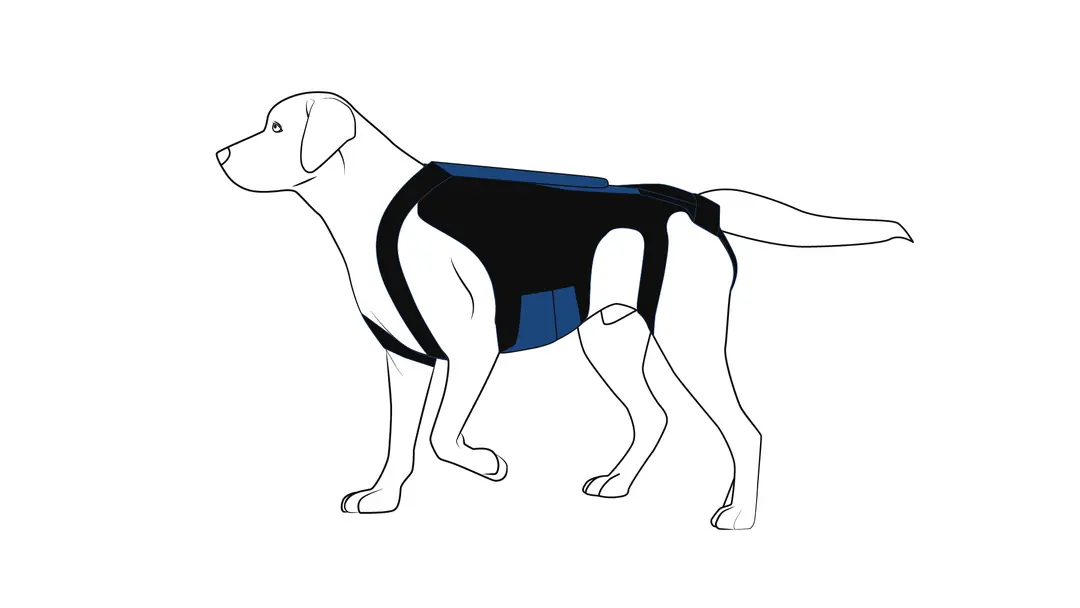
The brace should fit as shown in these images.
After fitting, check the brace’s position along the spine, breathing, and movement. Remove it if you notice marked discomfort, rubbing, or a change in movement.
Introduce the brace gradually. Start with short sessions, monitor your pet’s comfort, and increase wear time over several days. Follow your veterinarian’s activity restrictions during this period. Do not increase walks or playtime because your pet is wearing the brace.
Follow your veterinarian’s plan for how often and how long to use the brace and when to remove it. Wearing the brace does not change recommended rest or activity restrictions.
The back brace helps support the thoracic and lumbar spine. The neck support is designed for the cervical spine and neck movement.
Compare your pet’s back length with the ranges in the size chart. Share the chest circumference with our team to confirm the fit around the body. Do not choose a size based only on breed or weight.
The brace may be suitable for cats and dogs when the measurements fit. Because cats can have different body proportions, compare their measurements carefully with the size chart.
No. Dogs of the same breed can have different back lengths and chest circumferences. Measuring both is especially important for long-bodied dogs.
These signs may be associated with IVDD or another neurological emergency. Restrict movement and seek veterinary care without delay before putting on the brace.
No. The back brace does not remove pressure on the spinal cord or treat a slipped disc. It should only be considered as additional support within a treatment plan set by a veterinarian.
